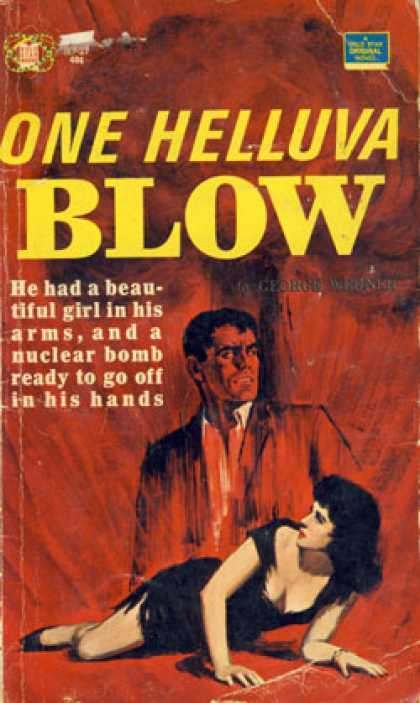
Bold pulp typography shouts “ONE HELLUVA BLOW” across a fiery red-orange cover, instantly leaning into the kind of wink-and-nudge phrasing that makes old-school ads, comics, and catalog art so ripe for double meanings. The palette feels like alarm bells—smoky, streaked, and urgent—while the oversized lettering does most of the selling, promising danger and sensation before you even read the smaller copy.
Down in the illustration, a sharply dressed man looms with a tense, guarded expression as a woman in a dark dress reclines at his feet, posed somewhere between glamour and distress. The tagline turns the screw: “He had a beautiful girl in his arms, and a nuclear bomb ready to go off in his hands,” a line that deliberately collides romance, menace, and innuendo in one breath. That mix of melodrama and suggestive wordplay is exactly what made mid-century pulp and promotional art so memorable—and so unintentionally funny to modern eyes.
Old print culture often relied on teasing ambiguity to grab attention at a glance, and this cover is a masterclass in selling shock with a smirk. For readers who love decoding “innocent or not” phrasing in vintage media, the exaggerated claims, the charged poses, and the sensational copy offer a time capsule of how humor, sex appeal, and anxiety could share the same page. It’s the kind of artifact that still sparks conversation today—part nostalgia, part cultural critique, and part guilty laugh at the unintended double entendre.