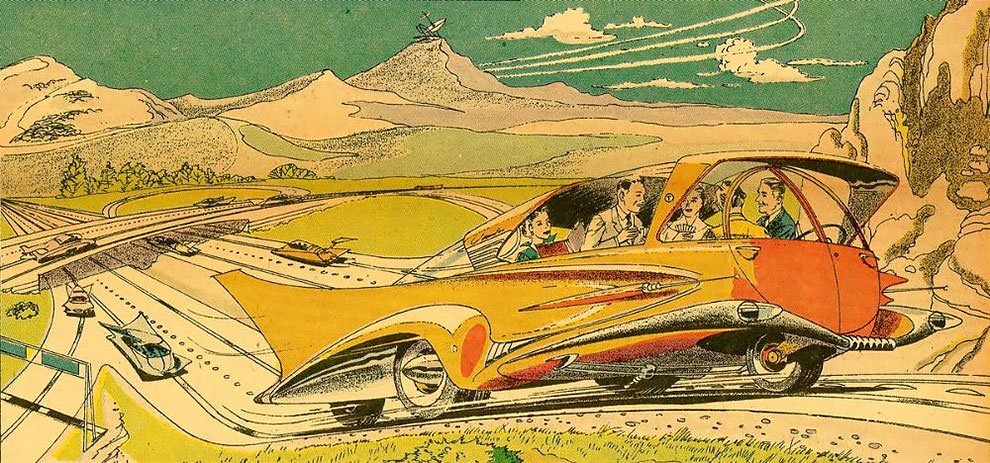
Tomorrow-on-wheels is the mood here: a sleek, bubble-canopied car glides along a sweeping highway while its passengers chat and relax, as if the machine needs no help at all. The road unfurls through open countryside toward distant hills, and the streamlined bodywork—fins, curves, and jet-age flair—signals a future that was meant to feel effortless. For a post titled “Driverless Cars,” the humor lands in that calm confidence: everyone looks like they’ve already delegated the hard work to the vehicle.
Around the car, the broader scene sells the dream of automated travel, with multi-lane roads bending smoothly like ribbons and tiny vehicles cruising in orderly lines. The perspective makes the “autopilot” idea feel inevitable, as though modern infrastructure and modern design were destined to cooperate. Even the playful exaggeration of the car’s shape reads like a visual joke about progress—if the styling is this bold, why wouldn’t the technology be equally miraculous?
There’s also a quietly revealing historical angle: long before today’s sensors, maps, and machine learning, people were already imagining hands-free driving as a near-term luxury. This retro-futuristic artwork doubles as a snapshot of public optimism about transportation technology, when convenience and safety were assumed to arrive together. As an SEO-friendly look back at early visions of autonomous vehicles, it’s a reminder that “driverless cars” have been part of the cultural imagination for generations—sometimes seriously, and sometimes simply for a laugh.