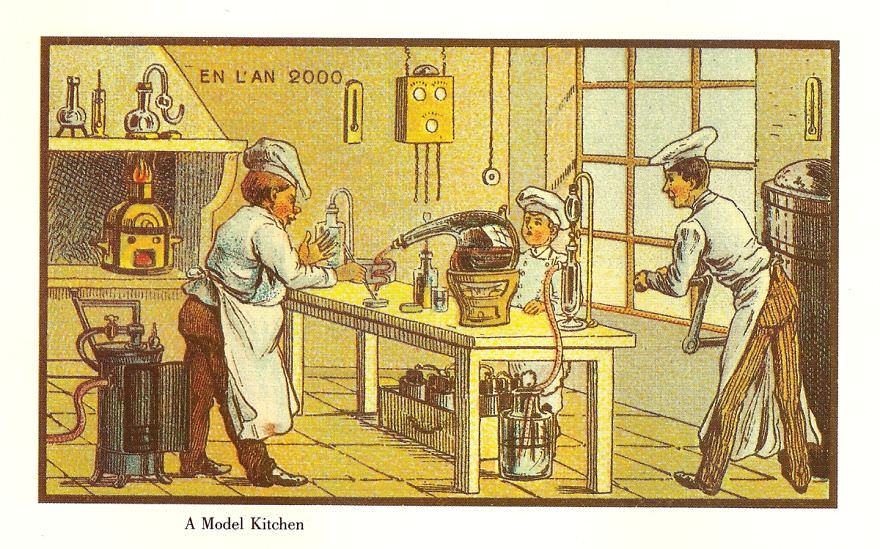
A playful vision of “Modern Kitchens” unfolds like a turn-of-the-century dream, where cooks in tall hats work beside shiny contraptions that promise effortless meals. The caption “A Model Kitchen” and the cheeky “EN L’AN 2000” hint at a future imagined long ago, when progress meant gadgets, pipes, and clever systems replacing muscle and mess. Even at a glance, the scene reads as both advertisement and joke—confidence in technology mixed with a wink at how strange tomorrow might look.
Across the countertop, hoses and spouts curl toward a central machine as if the kitchen itself has become a miniature factory. Bottles, valves, and a boxy control unit on the wall suggest early fascination with automation and sanitary efficiency, while a large barrel-like container looms at the edge, ready to feed the process. Rather than a cozy hearth, this is a workshop of food, with clean lines, tiled floors, and the sense that every task can be engineered into a mechanism.
For readers browsing vintage kitchen history, retro futurism, or early ideas of home technology, the humor lands because it’s familiar: every generation believes its appliances will finally tame daily labor. The illustration celebrates optimism about “the kitchen of the future,” yet it also gently pokes at our faith in complicated solutions to simple chores. In that tension—between wonder and absurdity—this historical image becomes a timeless commentary on modern cooking trends and the ever-changing promise of convenience.