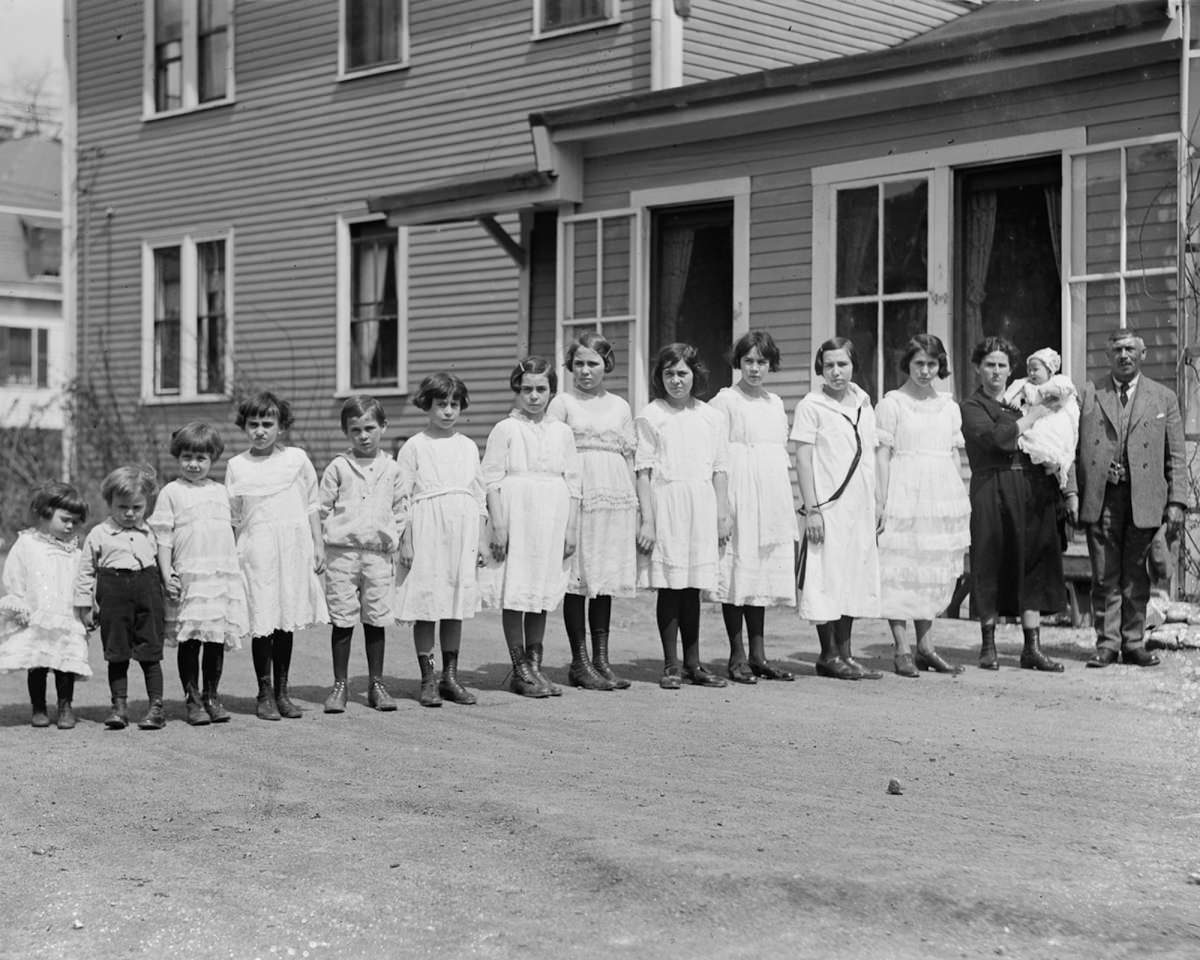
Thirteen children stand in a tidy line outside a clapboard building, their white dresses and dark stockings creating a striking rhythm across the frame. At one end, the youngest pair hover close together; at the other, two adults anchor the scene, one holding a bundled baby as if to make sure every “little patron” is counted. The setting—big windows, simple trim, and a street-level entrance—feels like the everyday frontage of a neighborhood place where family and business met.
The title’s wink, “The Pub-lic Domain,” turns a familiar institution into a family story, and the photograph plays along with its blend of formality and mischief. The children’s expressions range from brave to bored, the kind of honest mood a camera can’t quite tame, while their practical shoes and neatly set hems suggest someone took care to present the group properly. Even without a visible signboard, the pose reads like a proud inventory of a household that doubled as a public-facing enterprise.
For readers who love social history, this is a vivid snapshot of how communities once revolved around family-run establishments and the people who kept them going. It’s also a wonderful detail-rich image for anyone researching period clothing, childhood, or streetscape architecture—down to the sash windows, the porch line, and the unpaved road underfoot. Whether you come for the humor in the title or the warmth of the scene, the Noonan family’s “13 little patrons” invite a closer look and a lingering smile.