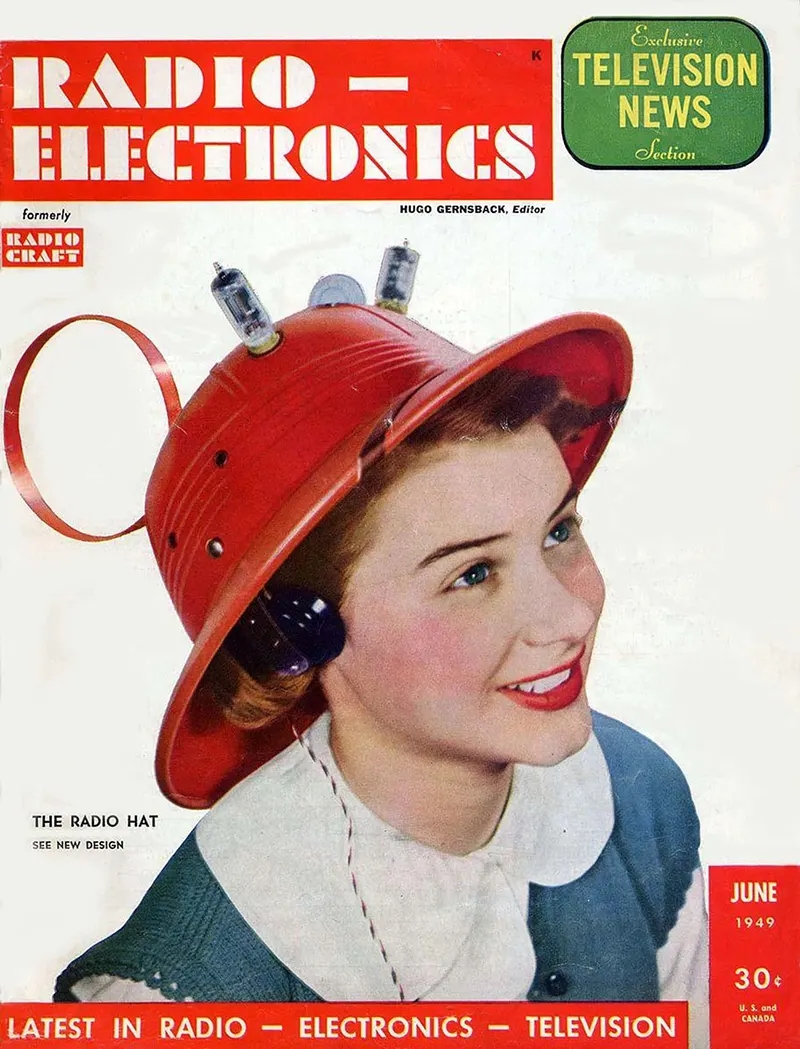
Bold red headgear with vacuum tubes sprouting from the crown is the kind of mid-century optimism you can almost hear humming. Titled “Radio Hat, 1949,” this magazine-cover image pairs a bright, cheerful portrait with an unabashedly futuristic wearable—part fashion statement, part gadget experiment. Even the design cues feel like a promise that everyday life was about to become more modern, more electronic, and a little more playful.
Look closely and the details read like a DIY dream for the radio hobbyist: earphone-style receivers, visible wiring, and that glossy helmet-like shell meant to make technology look friendly. The surrounding typography and color blocks—“Radio-Electronics” and “Television News”—anchor the photo in a moment when radio culture, home electronics, and the new fascination with television overlapped. It’s funny, yes, but it’s also a neat snapshot of how pop media sold the future as something you could literally wear.
Behind the whimsy is a deeper story about postwar consumer tech and the rise of electronics as a mainstream pastime. Images like this helped turn components and circuits into lifestyle conversation pieces, inviting readers to imagine themselves as early adopters in an age of rapid innovation. For collectors and history buffs alike, the “radio hat” stands out as a charming artifact of 1949—equal parts kitsch, marketing, and genuine curiosity about what personal technology might become.