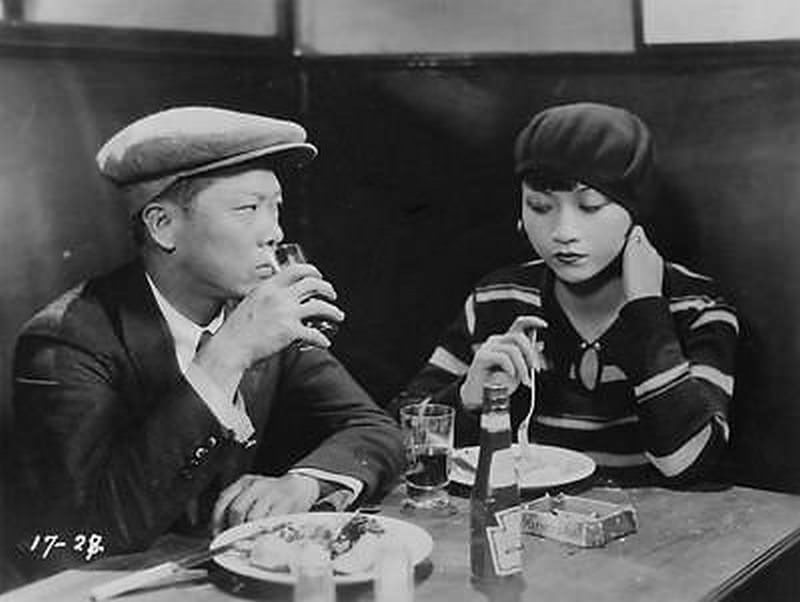
Piccadilly’s café culture comes into focus in this 1929 scene of Anna May Wong and King Hou Chang seated at a small table, surrounded by the everyday clutter of dining—plates, glasses, and condiments. The candid mood feels unposed: he pauses mid-sip, angled toward her, while she rests her hand near her neck and gazes downward, cigarette poised as if between thoughts. Their clothing—his flat cap and tailored jacket, her sleek bob and striped dress—anchors the moment in late-1920s urban style.
Rather than the bright dazzle often associated with Piccadilly, the setting here is intimate and slightly shadowed, suggesting the quieter corners of a busy district. The photographer lingers on gestures and glances, letting the story unfold in body language: attention, patience, and perhaps a private conversation withheld from the viewer. It’s a snapshot of public life that still preserves the privacy of the people within it.
For readers interested in classic cinema history and the international pathways of early screen culture, this photo offers a grounded counterpoint to publicity glamour. Anna May Wong’s presence in London aligns with a wider 1920s fascination with film, modern fashion, and cosmopolitan nightlife, while the inclusion of King Hou Chang underscores the networks of artists and entertainers moving through the city. As a historical image tied to Movies & TV, it invites closer looking—at what was worn, what was shared, and how Piccadilly served as a stage for modern celebrity and ordinary human moments alike.