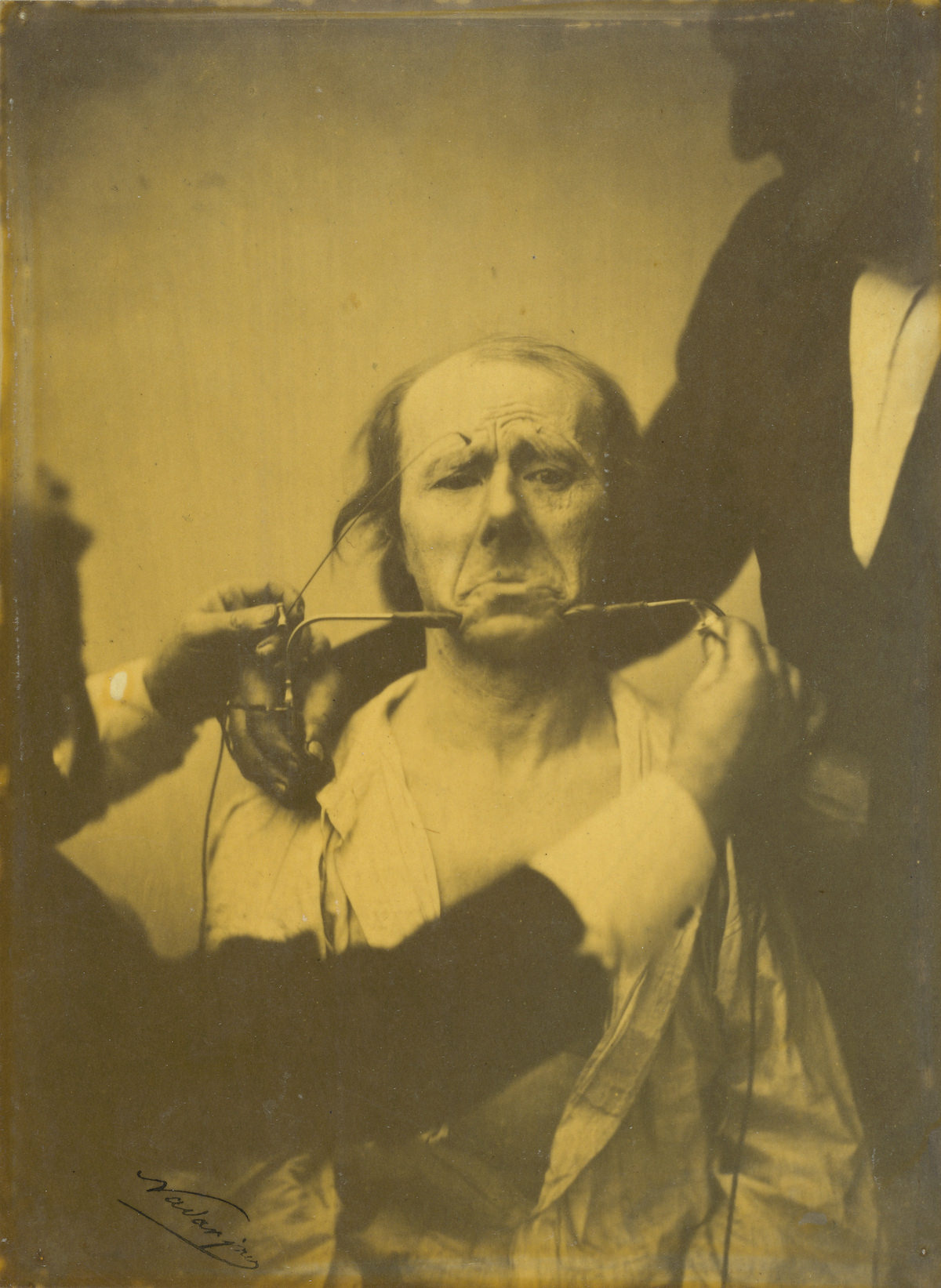
A gaunt face fills the frame, brows drawn into a knot and lips tightened as if to keep a cry from escaping. Two shadowed figures lean in from either side, their hands gripping thin wires and a metal bar pulled across the man’s mouth, turning the portrait into an uneasy tableau of restraint. The sepia tones, soft focus, and worn surface lend the scene the feel of an early photographic experiment—part documentation, part performance.
Pain and despair here are not abstract ideas but written into the body: strained neck, hollowed cheeks, and eyes fixed forward with a pleading, exhausted stare. The device at the face suggests a clinical or coercive context, evoking the era when medical and “scientific” imagery could blur into spectacle, and the subject’s consent was rarely the point. Even without a visible caption, the staging invites questions about power, treatment, and the cost of being observed.
As an artwork in photographic form, the image works through contrast—sharp human vulnerability against the impersonal certainty of the hands at work. Collectors and historians of historical photography will recognize how such portraits can function as evidence, curiosity, and moral warning all at once. Posted today, it becomes a stark reminder of how easily suffering can be framed, preserved, and circulated, long after the moment itself has ended.