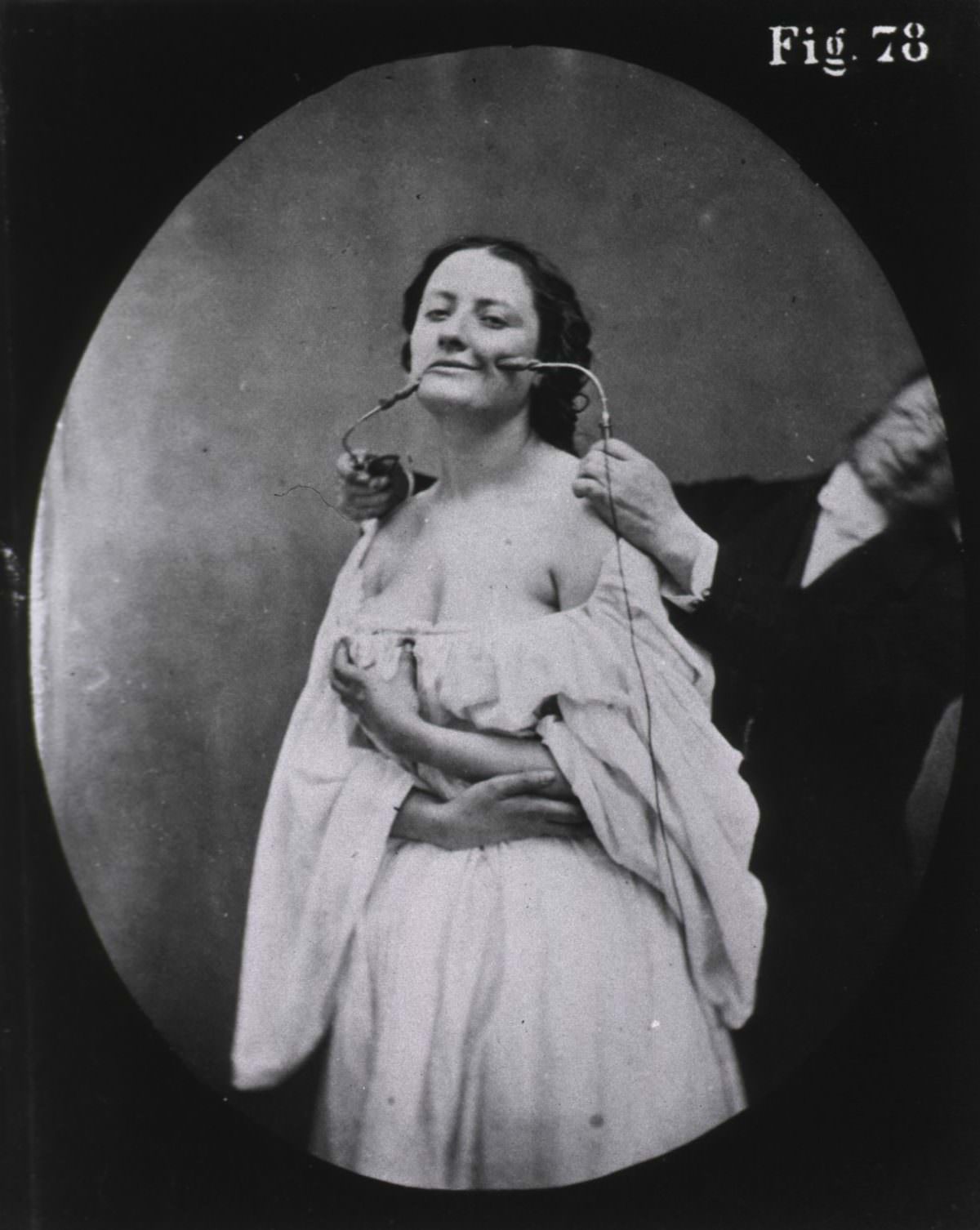
A coy smile and a lifted chin set the tone for “Scene of coquetry,” a staged moment that plays as much to the camera as to the unseen audience beyond it. The woman’s loose, off-shoulder garment and relaxed posture suggest a theatrical tableau rather than everyday life, with flirtation expressed through pose and expression as carefully as costume. The oval framing adds a studio-like intimacy, pulling attention toward face, neckline, and gesture.
At the edge of the composition, a partially visible figure—only arms and a dark sleeve clearly seen—holds thin cords or a wire-like prop near the sitter’s cheeks, hinting at a controlled setup behind the performance. That small intrusion of the “operator” into the scene is part of the charm: it reveals how early photographic art could be playful, experimental, and knowingly artificial. Even the printed “Fig. 78” in the corner reads like a catalog or instructional plate, reinforcing the sense that this is an artwork meant to demonstrate an idea.
For readers interested in historical photography, staged portraiture, and the visual language of flirtation, this image offers a vivid example of how coquetry was constructed for the lens. The soft lighting, simple backdrop, and deliberate props turn a fleeting expression into a study of mood and suggestion. As a WordPress feature in an “Artworks” collection, it invites close looking—not only at the subject, but at the mechanics of making romance, comedy, and performance believable in a single frame.