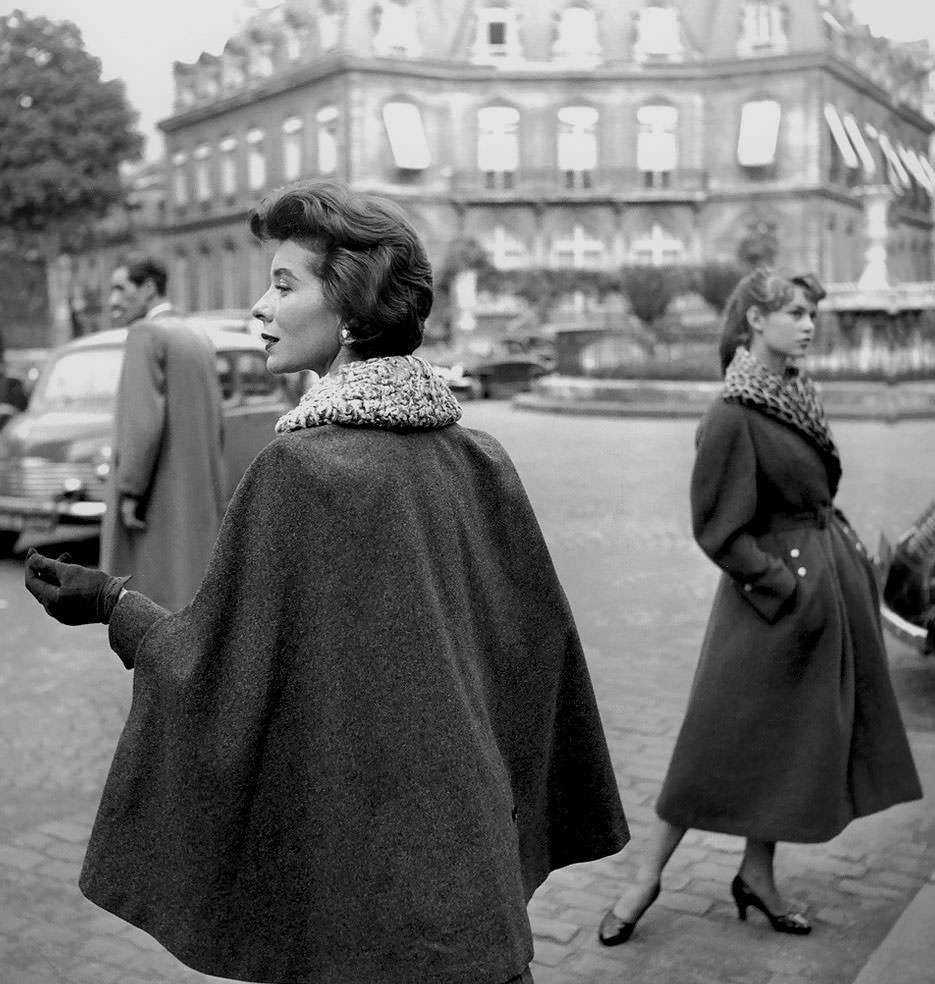
Against a grand European streetscape, Bettina Graziani and Brigitte Bardot appear in mid-century elegance, their silhouettes framed by a broad plaza and the softened geometry of a mansard-roofed building behind them. One woman turns in profile, gloved hand slightly lifted as if caught between conversation and motion, while the other stands farther back, poised and watchful. The city traffic—rounded cars and blurred pedestrians—adds a lived-in rhythm that makes the fashion feel part of everyday life rather than stagecraft.
The clothing does much of the storytelling: voluminous cape-like outerwear, nipped waists, and textured collars that read as both practical and luxurious. Dark heels, careful hair styling, and the controlled drape of fabric reflect the postwar appetite for polish, when couture sensibilities filtered into street style and helped define the decade’s visual identity. Even in monochrome, the image suggests contrast—matte wool against glints of jewelry, structured tailoring against the open air of the square.
Titled “Bettina Graziani and Brigitte Bardot, 1954,” the photograph sits at a crossroads of fashion and culture, pairing a model’s editorial poise with the emerging magnetism of screen celebrity. Rather than a posed studio portrait, it feels observational, like a moment borrowed from an afternoon in a fashionable capital, where glamour traveled by sidewalk and curbside. For readers searching classic French style, 1950s couture-inspired coats, or iconic images of Bettina and Bardot, this scene offers a crisp snapshot of an era learning to perform modern fame in public.