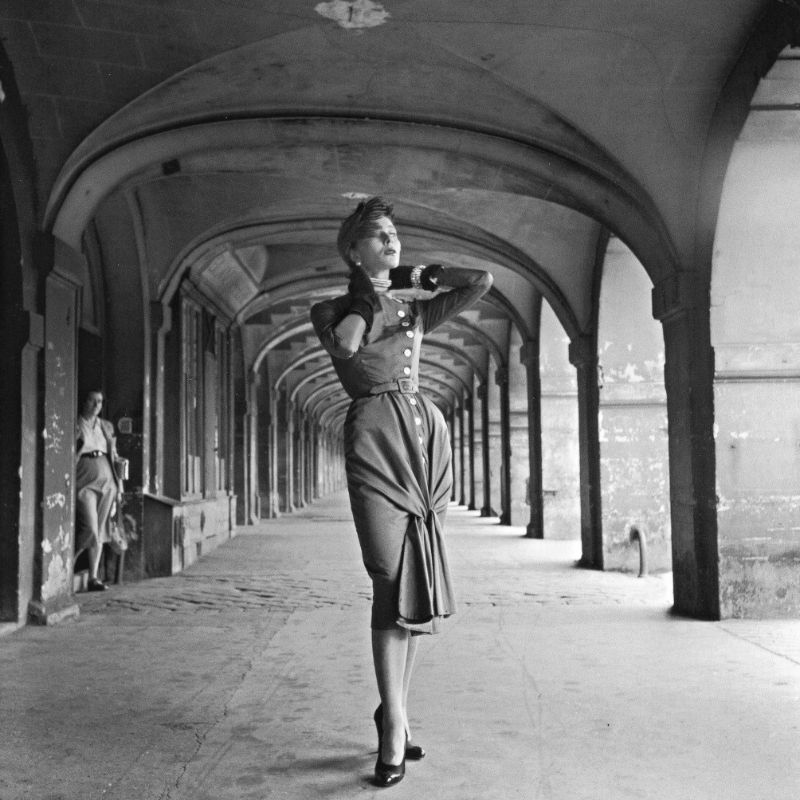
Under the vaulted arcades of Paris’s Place des Vosges, a poised model pauses mid-stride, framed by a rhythmic tunnel of stone arches that pulls the eye deep into the square. Light skims across worn walls and paving, giving the scene a lived-in texture that contrasts with the polished elegance of the pose. A passerby lingers in the background, a quiet reminder that high fashion in postwar Paris often unfolded in real streets, not just studios.
Bettina appears in a refined day dress by Jacques Fath, tailored to emphasize a sculpted silhouette while keeping an air of everyday practicality. The dress’s buttoned front, fitted waist, and softly gathered skirt read as unmistakably 1950 in spirit—structured, confident, and designed to move with the body. Gloves, heels, and a small hat or headpiece complete the look, turning a simple walk beneath the arches into a lesson in Parisian style.
Fashion photography of this era loved architecture for its symbolism, and Place des Vosges offers both grandeur and geometry: repetition, perspective, and a sense of timeless Paris. The composition balances couture and cityscape, showcasing how designers like Fath marketed clothing as part of a complete lifestyle—urban, modern, and impeccably composed. As a cultural snapshot, it captures the glamour of French haute couture meeting the everyday atmosphere of the Marais, where elegance could be staged with nothing more than stone, light, and attitude.