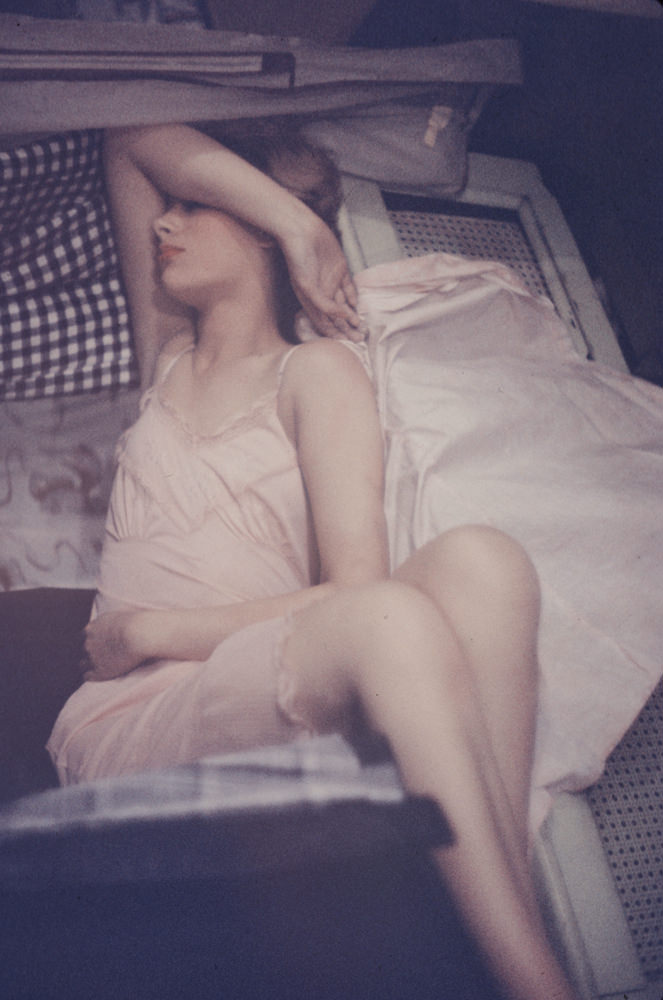
Behind the velvet curtains of 1958 New York nightlife, the glamour often ended in a room like this—tight, dim, and made for catching a few minutes of sleep rather than enjoying it. A young showgirl lies sprawled on a narrow bed or cot, still in delicate stage lingerie, her arm thrown over her eyes as if to shut out the leftover glare of the club. The rumpled sheets and close quarters hint at a backstage world that audiences rarely imagined while watching polished chorus lines under spotlights.
Up close, the details tell a quieter story of labor: sheer fabric, stocking tops, and the soft creases of clothing that’s been worn for hours, then dropped into rest without ceremony. Her posture reads as exhaustion more than pose—an in-between moment after the last number, before makeup comes off and the night truly ends. In the mid-century nightclub economy, “showgirl” meant discipline, repetition, and the constant upkeep of a look that had to appear effortless from the dining room.
For readers interested in fashion and culture, this photo complicates the myth of nonstop sparkle by showing the grit that kept it running. It’s a candid glimpse into the private cost of performing femininity on demand—where beauty was part of the job description, and fatigue was simply folded into the schedule. Inside the glitter and grit of New York nightclubs, scenes like this remind us that the era’s entertainment history was built as much on backstage downtime as on the chorus line itself.