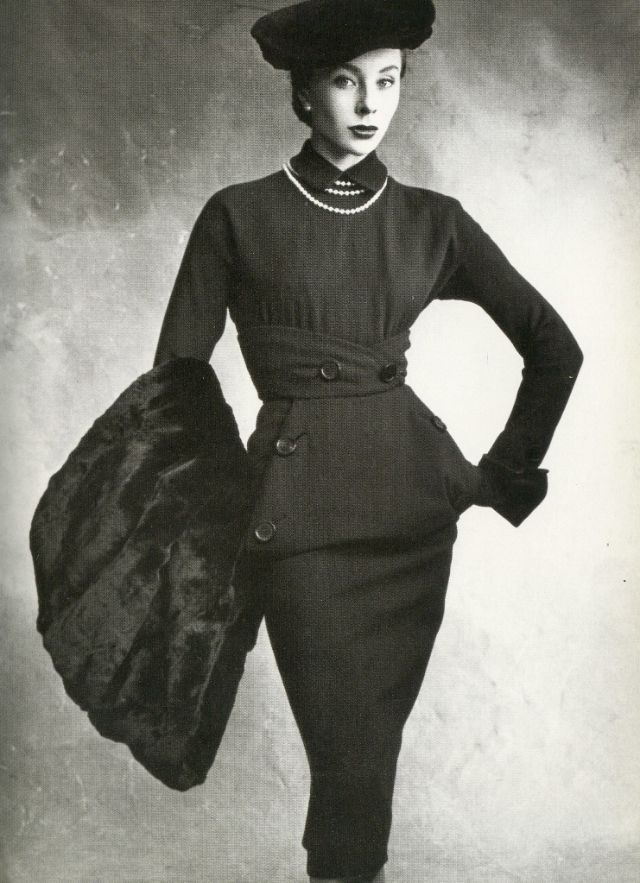
Bettina stands in a poised studio pose, her gaze steady beneath a sculpted hat that frames her face like a period punctuation mark. A double strand of pearls and small earrings catch the light, while a dark stole or coat is draped over one arm, adding weight and drama to the silhouette. The clean backdrop keeps attention on the attitude: composed, slightly aloof, and unmistakably mid-century.
From Dior’s “Diabolo” line, the dress reads as an exercise in controlled elegance, with a cinched waist and fitted skirt that follow the era’s fascination with refined curves. Subtle structure at the shoulders and a high neckline create a sleek column above the waist, while the belt and prominent buttons emphasize tailoring over ornament. The overall effect is both severe and sensual—daywear discipline with evening-level polish.
Published in American Vogue on September 1, 1950, the image reflects how postwar fashion culture turned couture into an international language of aspiration. Bettina Graziani’s presence—often cited as a defining early “supermodel” charisma—bridges Parisian design and American editorial appetite, selling not only a garment but a manner of moving through the world. For historians of style, it’s a concise lesson in 1950s couture: impeccable construction, deliberate accessories, and a model who makes restraint feel theatrical.