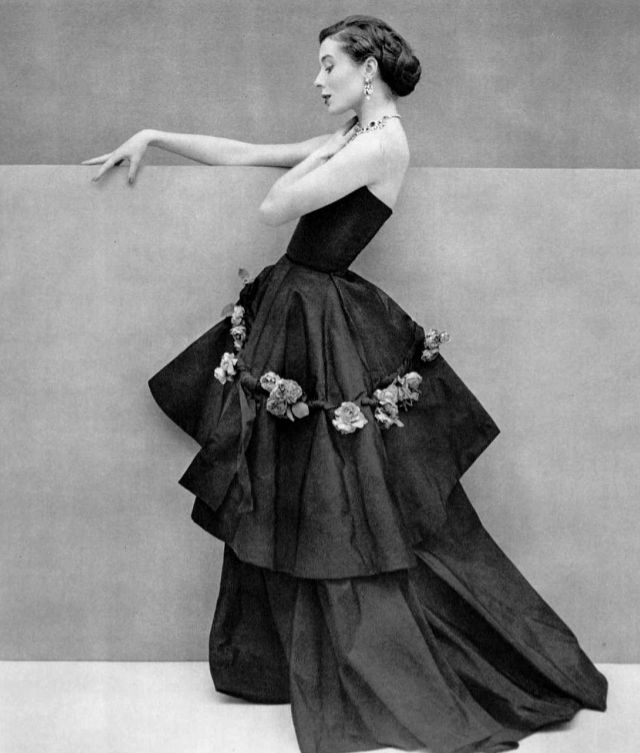
Bettina is posed in profile with the poise of a dancer, one arm extended and the other folded lightly across her torso, turning a fashion portrait into a study of line and balance. Her hair is swept into a neat low chignon, and the minimal backdrop keeps every attention on the silhouette and the controlled elegance of her stance. The overall effect is refined, graphic, and unmistakably mid-century in its calm confidence.
The black silk evening gown by Grès builds drama through structure: a fitted, strapless bodice gives way to a sculptural, tiered skirt that swells outward before falling into a long, weighty train. A tunic-like layer is ornamented with a band of roses, their clustered petals forming a soft floral garland against the dark sheen of the fabric. Jewelry is kept discreet but luminous, adding pinpoint sparkle without competing with the couture construction.
Fashion in 1950 often negotiated between severity and romance, and this look captures that tension—architectural tailoring tempered by flowers and flowing silk. Bettina’s presence, associated with the era’s rise of the fashion model as a recognizable personality, helps sell not just a dress but a mood of modern sophistication. For readers searching classic haute couture photography, Grès evening gowns, or Bettina Graziani style, this image stands as a polished emblem of postwar glamour and French fashion culture.