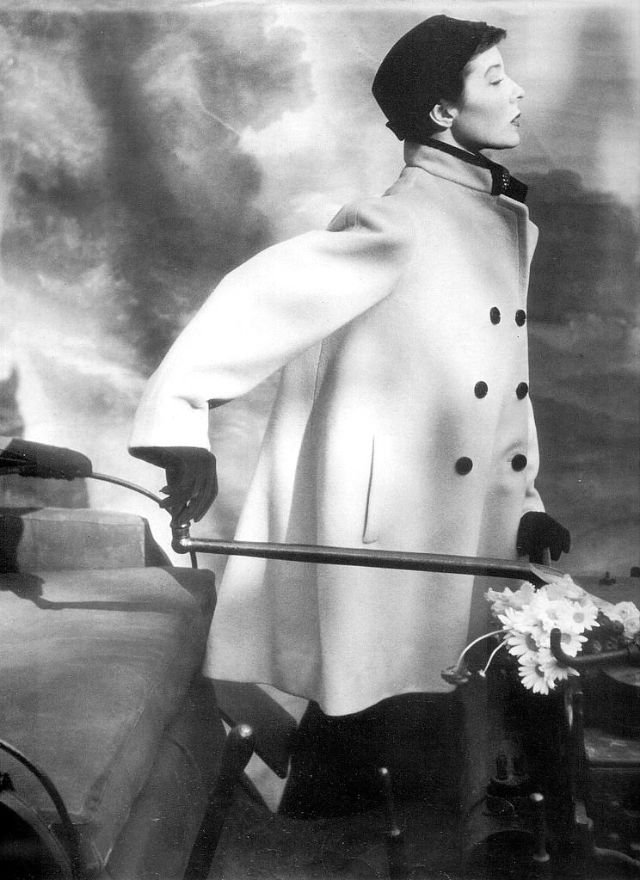
Poised in profile, Bettina wears a sculptural Balenciaga coat that turns outerwear into architecture, its broad, cape-like silhouette floating away from the body as if caught by a passing gust. The double-breasted front with dark buttons anchors the look, while a snug collar, dark gloves, and a small hat add crisp contrast to the pale fabric. Her lifted chin and closed eyes suggest calm confidence, the kind of composed drama that defined high-fashion photography in the early postwar years.
Along the edge of the frame, the handlebar and metalwork of a bicycle slip into view, with a cluster of light-colored flowers softening the industrial lines. That everyday detail heightens the couture: the coat appears even more refined when set against utilitarian objects, hinting at city streets, errands, and movement. The blurred background keeps attention on the garment’s volume and tailoring, letting the viewer read the cut, drape, and balance that made Balenciaga’s designs so influential.
Fashion historians often point to this era as a moment when models became style icons, and Bettina’s presence here explains why her image endured. She doesn’t merely display a coat; she animates it, giving the silhouette a sense of motion and modernity that feels strikingly contemporary. For anyone searching mid-century couture, Balenciaga coat 1950, or Bettina Graziani style, this photograph stands as a vivid meeting of fashion, culture, and storytelling in a single frame.