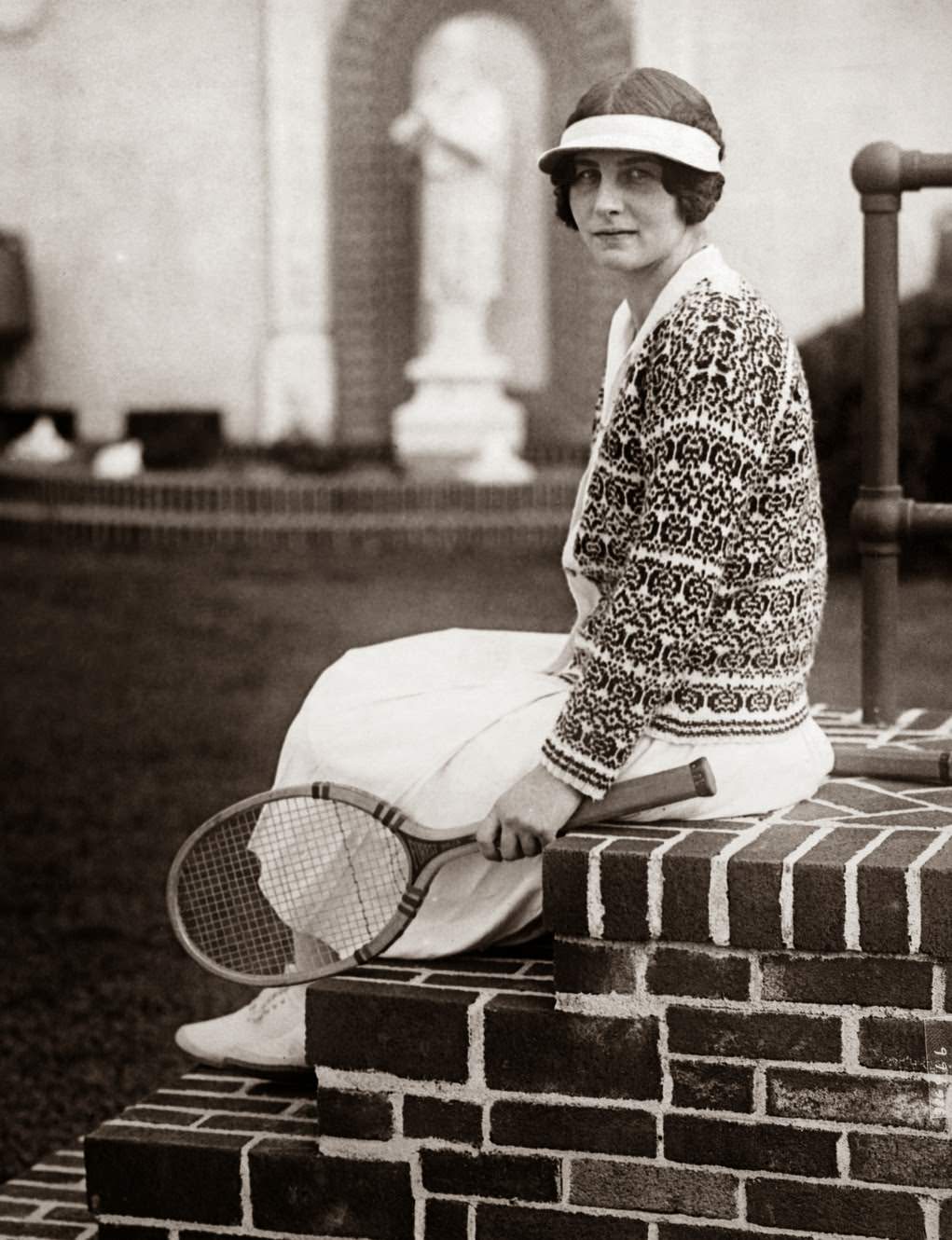
Poised on brick steps with a racket resting at her side, Helen Wills appears in a quiet moment between points, dressed in the crisp tennis whites of the era. A simple visor frames her face, while a patterned cardigan adds warmth and personality—practical courtwear that still reads as unmistakably 1920s. The blurred architecture behind her hints at a club setting without pinning the scene to any single place.
In 1925, women’s tennis was becoming a stage for modern athleticism, and portraits like this helped shape how champions were seen: composed, capable, and distinctly contemporary. The camera lingers on details a match report can’t capture—the firm grip on the handle, the relaxed posture, the steady gaze—suggesting confidence earned through training rather than theatrics. For readers searching “Helen Wills 1925” or “classic tennis photo,” this image speaks to an age when sport and style were evolving together.
Beyond its sporting context, the photograph offers a small study in texture and design, from the brickwork’s hard geometry to the soft folds of the skirt and the tight grid of the racket strings. It’s an intimate reminder that tennis history isn’t only written in trophies and scores, but also in the everyday rituals around the court: waiting, resting, and returning to play. As a historical snapshot, it preserves the mood of early 20th-century tennis as much as it preserves the athlete.