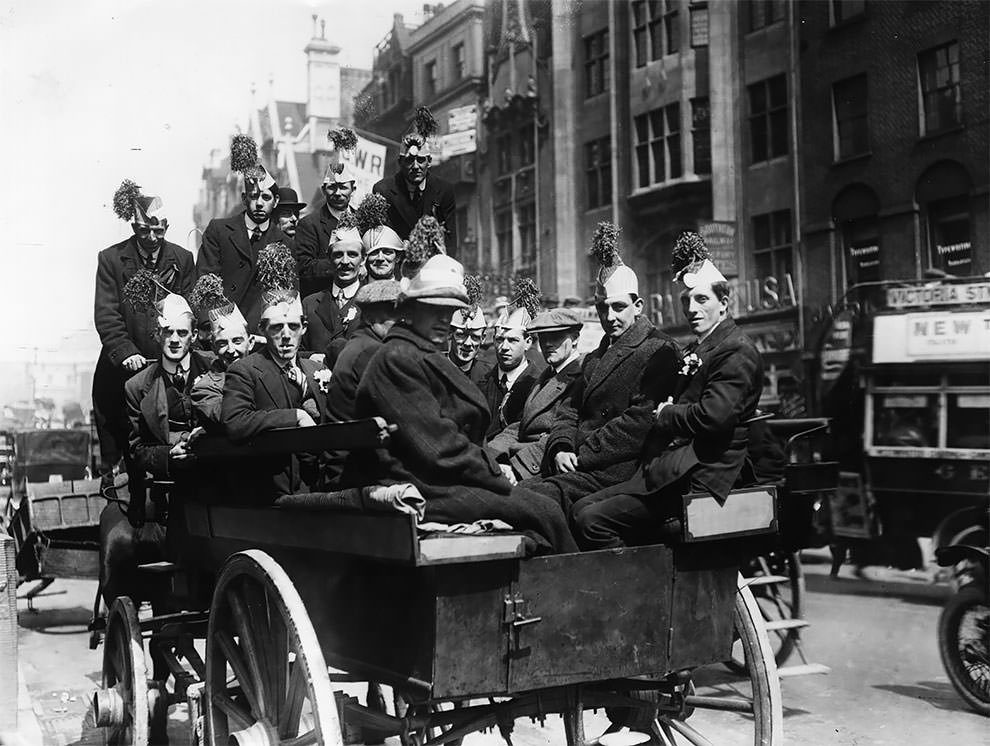
Liverpool supporters crowd the open back of a horse-drawn bus, dressed in heavy coats and suits yet accessorised with jaunty paper hats and sprigs of celebration. Faces lean toward the camera with a mix of pride and mischief, suggesting the kind of communal buzz only a big match day can summon. The carriage’s high wheels and exposed seating underline how travel itself could be part of the spectacle in early football culture.
Behind the riders, the street scene hints at a busy pre-war city: solid stone buildings, shopfront signage, and a packed roadway where different kinds of transport share the same space. The contrast between formal Edwardian clothing and carnival-like headgear gives the moment its charm, capturing supporters as both respectable workers and unabashed fans. Even without hearing the chants, the image reads like motion—an organised outing turning into a rolling parade.
Set in 1914, this journey to Crystal Palace for the FA Cup Final against Burnley sits on the edge of a world about to change, which makes the joy feel especially poignant. It’s a vivid reminder that long before coaches and motorways, British football fandom was already defined by pilgrimage, camaraderie, and making a day of it. For anyone searching the history of Liverpool supporters, FA Cup Final travel, or early 20th-century football crowds, the photograph offers a richly textured snapshot of the game’s enduring rituals.