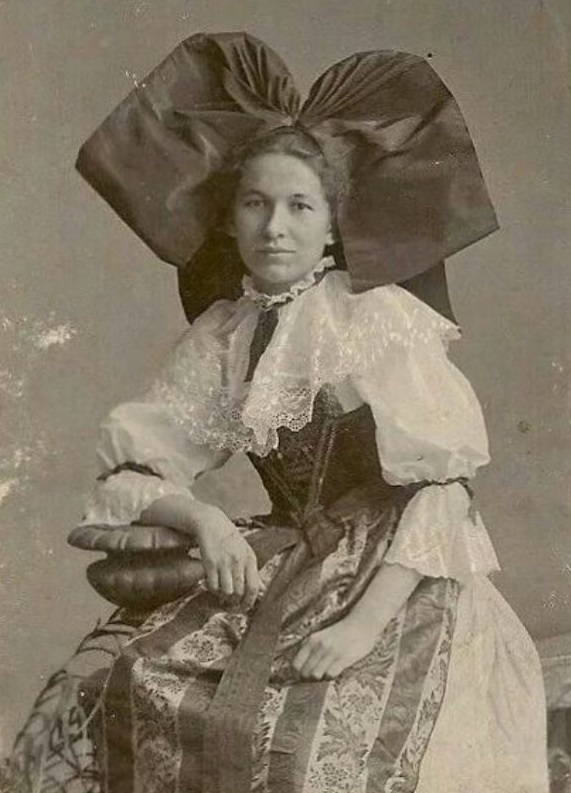
Centered against a plain studio backdrop, an Alsatian woman poses with calm assurance, her traditional headdress rising in a dramatic bow that frames her face like a silhouette. The oversized ribbons, dark and lustrous, draw the eye upward, while the soft lighting preserves fine details in her expression and the texture of the fabric. It’s a composed portrait, meant not only to record a likeness but to present a cultural identity with pride.
Lace-trimmed sleeves and a high ruffled collar soften the strong lines of the bodice, where fitted tailoring and decorative elements suggest careful workmanship. The patterned skirt—striped and richly woven—adds weight and movement, even in stillness, and a long apron panel falls neatly down the front. Her resting arm and seated posture feel deliberate, echoing the formality of early 20th century costume photography and the era’s appreciation for regional fashion.
Alsatian traditional dress became a powerful visual shorthand for local heritage, especially when photographed and circulated as portraits and postcards. In this image, clothing functions as both everyday finery and cultural emblem: the headdress, the lace, and the structured layers speak to community customs, craftsmanship, and the way women’s attire carried meaning beyond mere style. For anyone exploring Alsace history, folk costume, or European fashion and culture of the early twentieth century, this portrait offers a striking, unforgettable reference point.