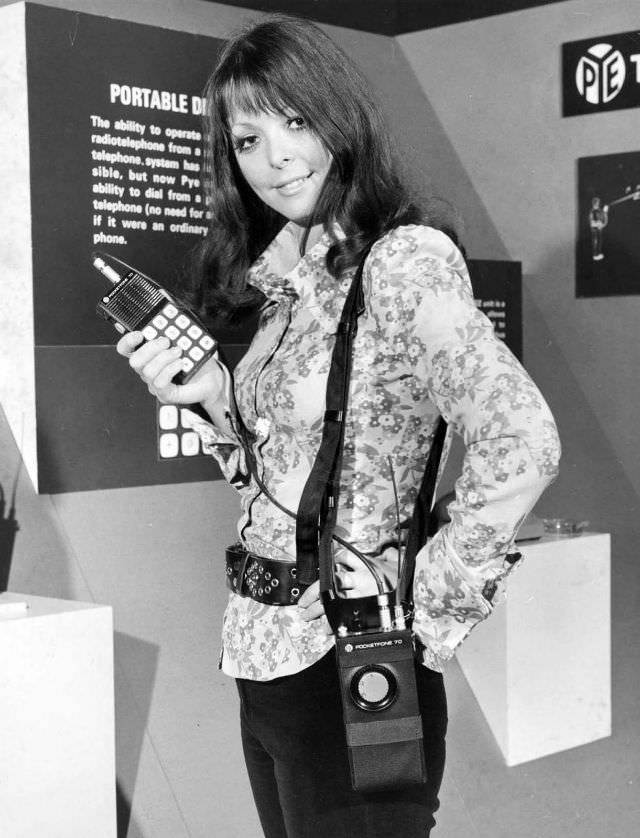
A poised demonstrator holds a chunky handheld unit while a shoulder-slung base pack hangs at her side, the kind of setup that made “portable” communications possible before pocket devices were imaginable. Large push-buttons, a prominent antenna, and the tangle of corded connections underline how experimental and hardware-heavy early personal telecom still was. Even so, the posture and presentation feel familiar to anyone who’s ever posed with a new phone—part practicality, part promise.
Behind her, exhibition signage references a portable radiotelephone and hints at a key breakthrough: dialing into existing telephone systems rather than relying only on point-to-point radio. That hybrid idea—radio freedom paired with the reach of the public phone network—bridged two worlds and helped set expectations for on-the-move calling. The technology may look bulky in retrospect, but the concept reads like a clear ancestor of the modern mobile phone.
For readers drawn to the history of inventions, this photo is a reminder that mobile communication didn’t arrive fully formed; it evolved through transitional devices that were equal parts radio gear and telephone accessory. The belt, straps, and base unit speak to the compromises engineers and users accepted to gain mobility, while the handset foreshadows the familiar interaction of dialing and talking. Searchers interested in early mobile phones, radiotelephones, and portable telecom prototypes will find a vivid snapshot here of a turning point on the road to today’s smartphones.