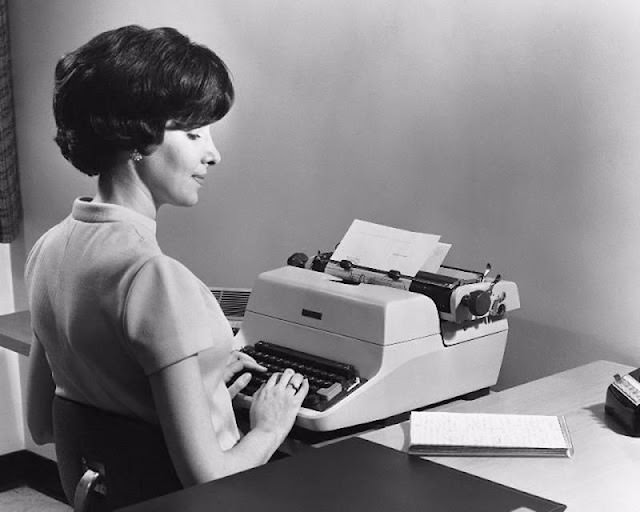
A woman sits in profile at a tidy desk, fingers poised over the keys of a sturdy electric typewriter while a fresh sheet waits in the roller. The clean lines of the machine, the simple blouse, and the neatly styled hair all evoke a mid-century office atmosphere where speed and precision mattered. With paper, notepad, and workspace arranged for efficiency, the scene speaks to the everyday discipline behind letters, reports, and the countless pages that once kept businesses running.
Typewriters were among the most influential past inventions to reshape communication, turning handwriting into crisp, standardized text that could be produced quickly and duplicated with ease. For many women, proficiency at the keyboard opened doors to paid clerical work and professional identity, even as the job demanded relentless accuracy and stamina. Each keystroke carried a physical presence—mechanical clicks, carriage movement, and the visual satisfaction of characters appearing in orderly rows.
Browsing historical photos of ladies using typewriters offers more than nostalgia; it reveals how technology and social change met at the office desk. Before computers, word processing meant planning, retyping, and mastering the machine’s quirks, from margins to ribbon changes. Posts like this one help preserve the texture of that era, highlighting the human side of invention and the quiet labor that shaped modern written life.