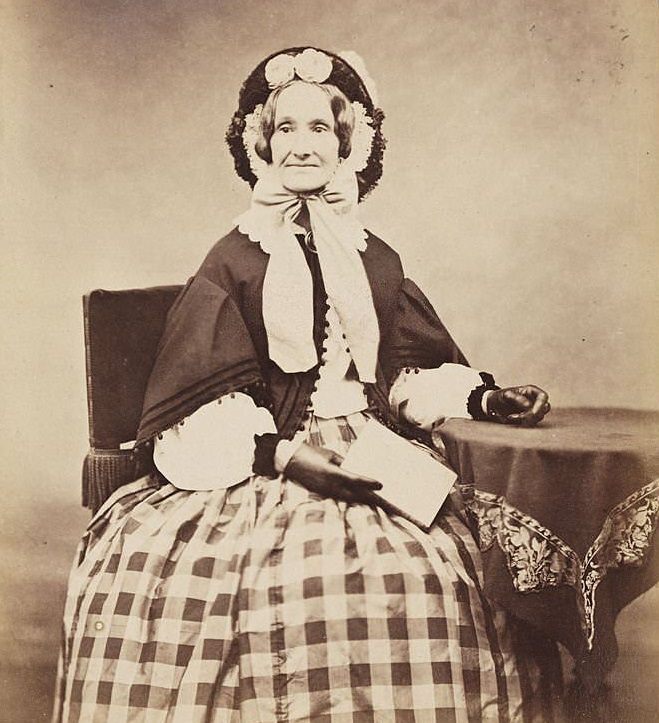
Seated with composed assurance, a Victorian woman poses in a brimmed bonnet trimmed with dark edging and tied beneath the chin, her expression calm and direct. The studio setting is spare—a chair and a draped table—so the eye is drawn to the careful arrangement of her clothing and the quiet formality of her posture.
Her outfit reflects mid-19th-century fashion at the height of the crinoline silhouette, the skirt spreading broadly in a bold checked pattern that reads clearly even in a softly toned print. A short cape or shawl sits over structured sleeves, while pale cuffs and a light front panel add contrast; dark gloves complete the look with a touch of propriety. Details like these—bonnet ribbons, layered fabrics, and the crisp geometry of the skirt—make the portrait a rich reference for Victorian dress and textile taste.
In one hand she holds a book, a small prop with large meaning in the visual language of the era, suggesting literacy, devotion, study, or simply respectable refinement. The photograph balances personal presence with cultural signal, offering a glimpse into how women of the period presented themselves for the camera—carefully, thoughtfully, and with an awareness of fashion as identity. For readers searching Victorian clothing history, crinoline-era portraits, or 1860s women’s fashion and culture, this image stands as an evocative example.