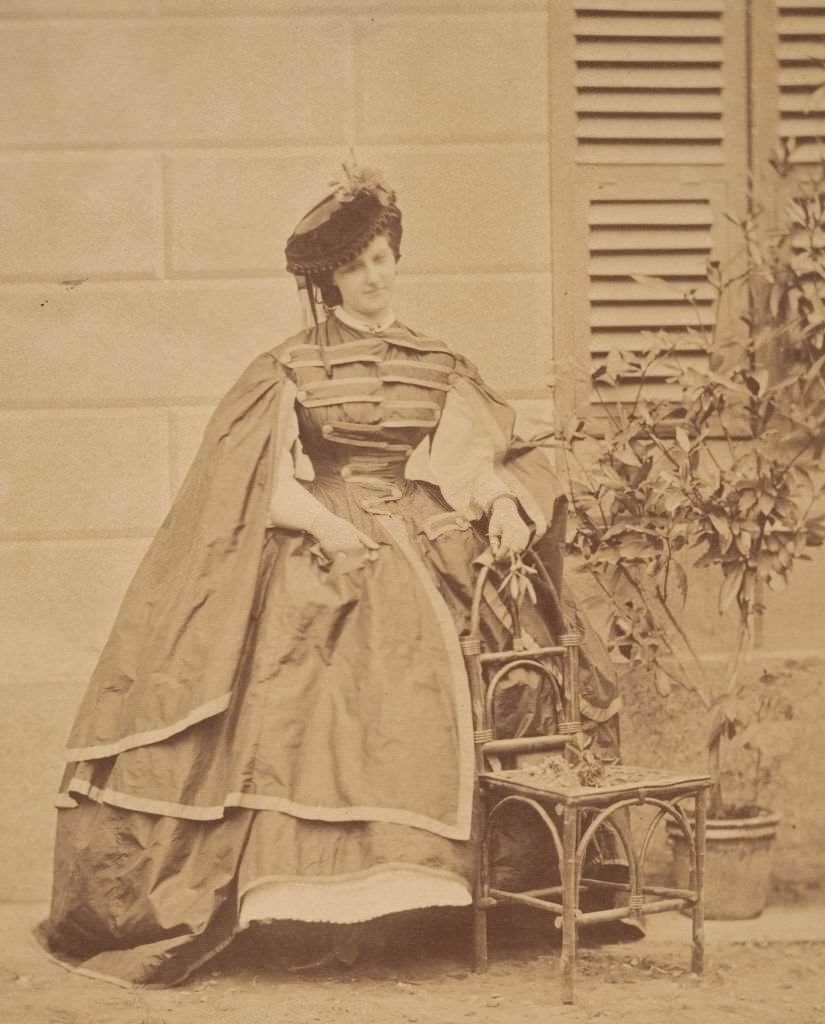
Taffeta catches the light with a soft sheen, and in this 1860 fashion study it appears in generous folds that emphasize the era’s taste for volume. The woman’s dress spreads outward in a bell shape associated with crinolines, its layered skirt edged with pale trimming that reads clearly even in the warm tones of the print. A fitted bodice with horizontal detailing and a tidy collar frames the upper body, while a small hat and coordinated cape add the finishing notes of mid-19th-century style.
Against a simple exterior wall with shuttered window, the pose feels half portrait, half display—an intentional presentation of silhouette and fabric rather than a fleeting moment. One hand rests near a wicker chair, a prop that anchors the composition and underscores domestic gentility. The cape drapes over the shoulders and down the back, contrasting the structured lines of the bodice with a broader, sweeping shape that reinforces the dress’s architectural form.
Fashion and culture meet in the practical meanings behind such garments: crinoline-supported skirts signaled refinement while also shaping how women moved through rooms, gardens, and social gatherings. The title, “The Taffeta Dress, 1860,” points to a textile prized for its crisp body and audible rustle, ideal for holding the contours expected in women’s clothing of the period. As a historical image, it offers a vivid reference for 19th-century dress history—materials, accessories, and the carefully composed self-presentation that defined Victorian-era portraiture.