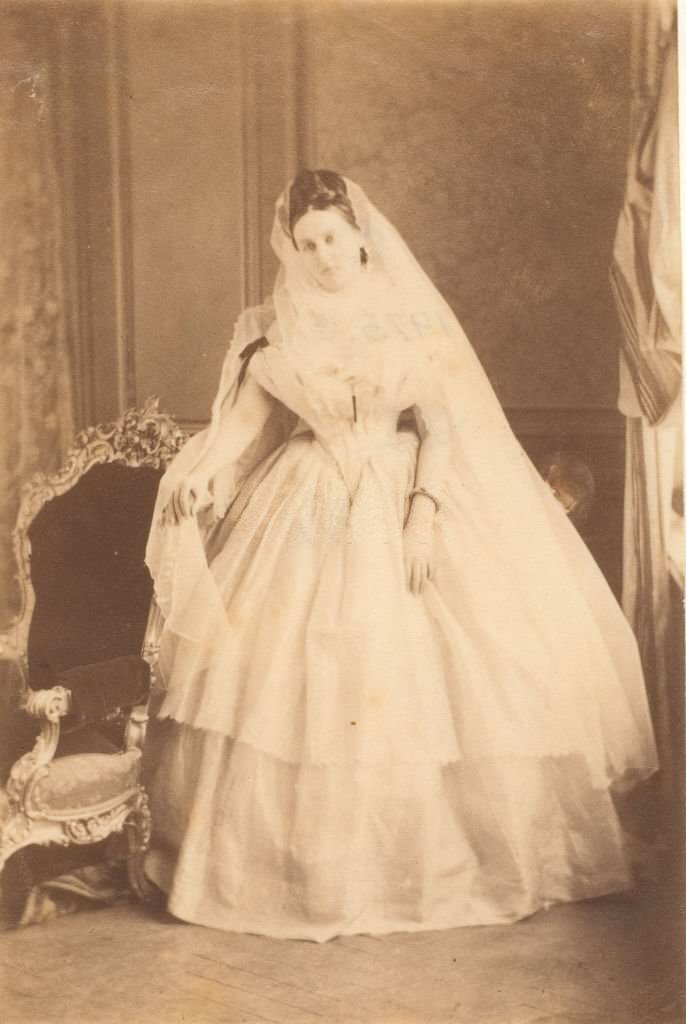
Derelitta stands poised in a voluminous crinoline gown, the skirt spreading in a bell-like silhouette that defines mid-19th-century women’s fashion. A gauzy veil falls over her hair and shoulders, softening her outline as she leans lightly against an ornate upholstered chair. The studio setting—plain wall panels, drapery to one side, and a polished floor—frames her figure like a stage, directing attention to the architecture of the dress.
Crinoline was more than a trend; it was a feat of engineering that reshaped everyday movement and social display, and the photograph invites close reading of its structure. The fitted bodice contrasts with the airy fullness below, while the sheer layers and delicate trimming create a luminous, clouded texture in the sepia light. Her calm expression and controlled posture echo the formality of portrait photography in the 1860s, when long exposures rewarded stillness and poise.
Fashion and culture meet here in a single, carefully composed image, where clothing signals status, modernity, and taste as much as it offers beauty. The chair’s carved details and the curated drapery hint at a comfortable interior world, reinforcing the portrait’s aspiration toward refinement. For viewers searching 1860s crinoline portraits, Victorian dress history, or 19th-century women’s attire, “Derelitta in Crinoline, 1860” remains a striking record of how clothing shaped identity in the era.