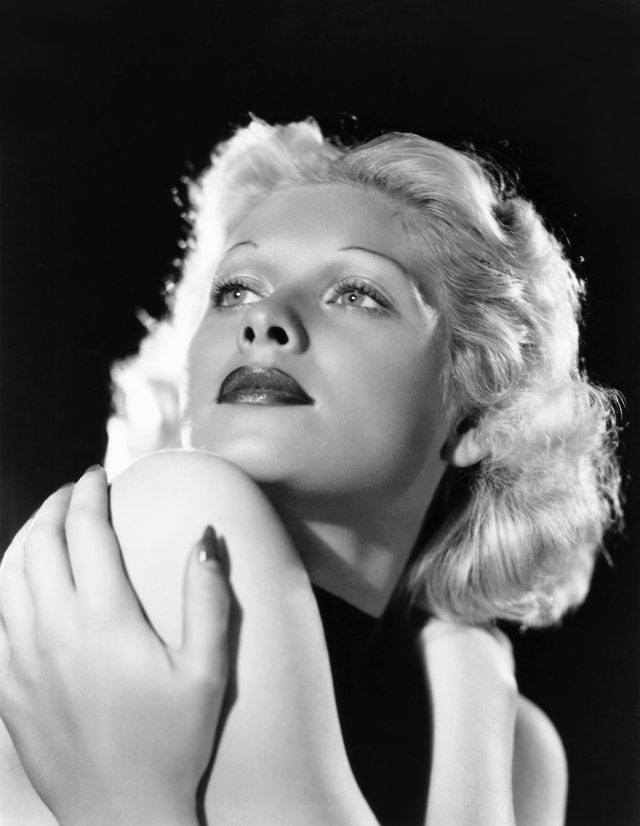
Soft studio light sculpts Lucille Ball’s face into a poised, almost dreamlike profile, her gaze lifted beyond the camera as if toward a stage just out of frame. Her platinum waves are arranged in polished 1930s glamour, while dark lipstick and carefully arched brows sharpen the look with classic Hollywood precision. The close crop and deep shadowed background turn the portrait into an exercise in elegance, making skin, hair, and expression the true subject.
A bent knee drawn close and a hand resting delicately in the foreground add a modern, intimate tension—part fashion pose, part screen siren. The photographer’s use of high-contrast highlights traces the contours of cheekbone, shoulder, and hair, emphasizing the era’s fascination with sleek silhouettes and cinematic drama. Even without a full view of the outfit, the styling reads as couture-minded, suggesting a fashion-world collaboration rather than a casual studio sitting.
Linked by the title to fashion designer Hattie Carnegie and dated to 1935, the image sits at the intersection of Fashion & Culture, where publicity portraiture and designer branding fed each other’s allure. It reflects a moment when actresses helped sell an ideal of sophistication, and designers benefited from the aura of film-star glamour. As a historical fashion portrait, it preserves the visual language of the mid-1930s—controlled light, immaculate grooming, and a confident femininity built for both magazine pages and the silver screen.