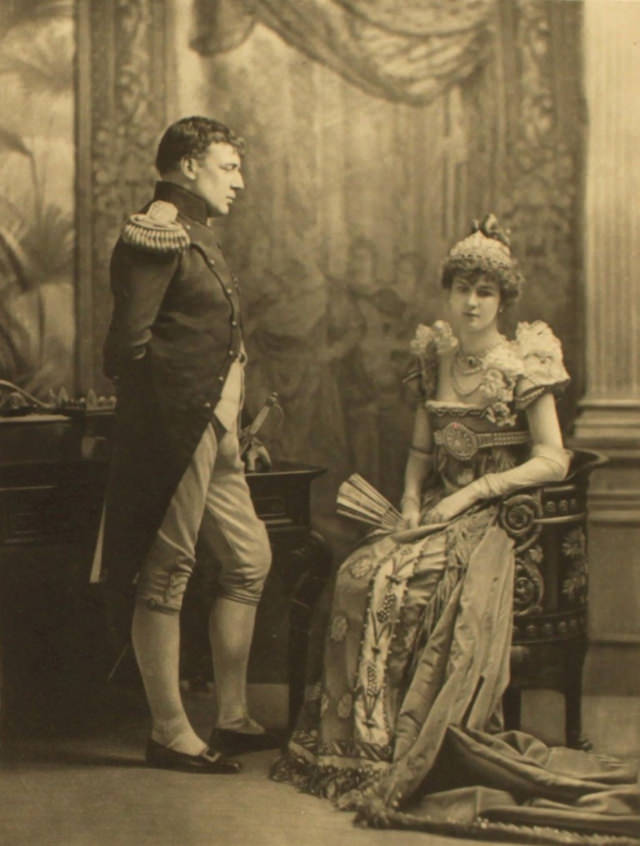
In a softly lit studio setting, a costumed couple adopts the poised gravity of an imperial portrait: “Napoleon” stands in profile with one hand tucked behind his back, while “Josephine” sits composed on an ornate chair, her gaze turned toward the viewer. The man’s dark military coat is trimmed with epaulettes and tailored lines that emphasize authority, set off by pale breeches and stockings that recall early nineteenth-century court dress. Draped curtains and painted architectural scenery create a grand backdrop, lending the scene the atmosphere of a palace interior rather than a modern drawing room.
Lady Hartopp’s interpretation of Josephine leans into opulence and texture—an embroidered gown with a long, trailing skirt, jeweled adornments, and a headdress that frames her face like a crown. A fan rests in her gloved hands, a small prop that adds elegance and the hint of performance, as if she has paused mid-entrance to be admired. The careful arrangement of fabric, jewelry, and posture reflects the era’s fascination with historical revival, when costume could conjure a whole world of romance, power, and theatrical refinement.
Tied to the Devonshire House Ball of 1897, the photograph works as more than a souvenir; it is a document of elite fancy-dress culture at its most ambitious, when guests sought authenticity through lavish materials and meticulous historical references. The pairing of Napoleon and Josephine offered instant recognition, allowing viewers to read the costumes as symbols of empire, glamour, and legend. For modern audiences searching the history of fashion and society pageantry, this portrait preserves the ball’s central appeal—spectacle carefully staged, then fixed forever in silvered tones.