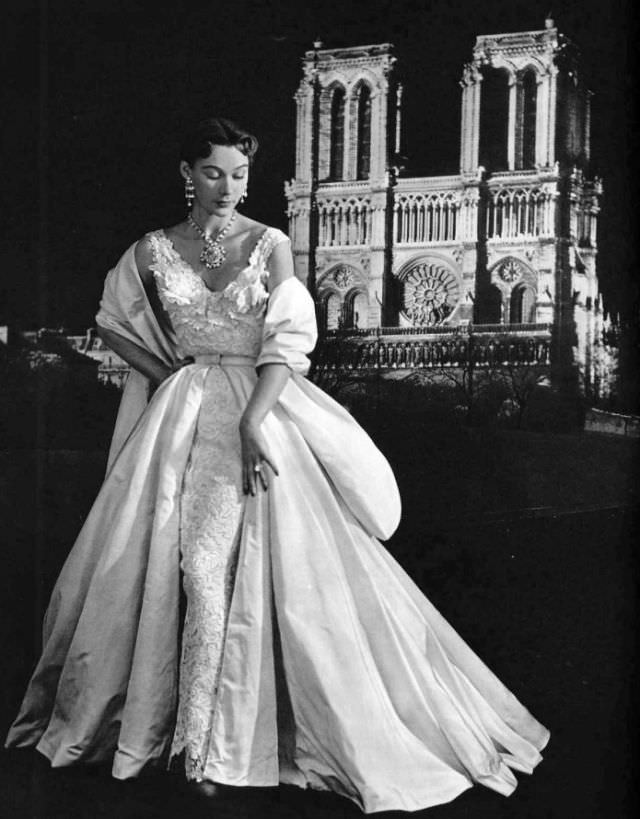
Sophie Malgat stands in poised profile, her gaze lowered as if caught mid-thought, while a floodlit Gothic cathedral rises behind her like a stage set. The night-dark background and bright architectural façade sharpen the contrast, turning the scene into a romantic tableau of postwar French glamour. Sparkling earrings and a bold necklace draw the eye upward, balancing the drama of the silhouette with the intimacy of a quiet, composed expression.
The couture look credited to Lucille Manguin layers textures in a way that photographs beautifully: a white Marescot lace sheath fitted through the torso, then enveloped by a sweeping skirt and stole in luminous white faille. Lace motifs read as delicate relief against the smoother, heavier sheen of the outer fabric, emphasizing the era’s love of tactile luxury. The gown’s structured volume suggests formal eveningwear at its most theatrical, with the wrap and skirt framing the model like sculpted petals.
Fashion photography of the early 1950s often leaned on iconic European architecture to signal elegance, travel, and cultural prestige, and this composition uses that language fluently. The cathedral backdrop—recognizable in its twin-tower profile and rose window—adds a sense of timelessness that amplifies the dress’s bridal-white radiance without needing a literal wedding context. Together, model, couture, and monument create an SEO-friendly snapshot of 1951 style: French high fashion, refined jewelry, and the cinematic mood that defined mid-century editorial imagery.