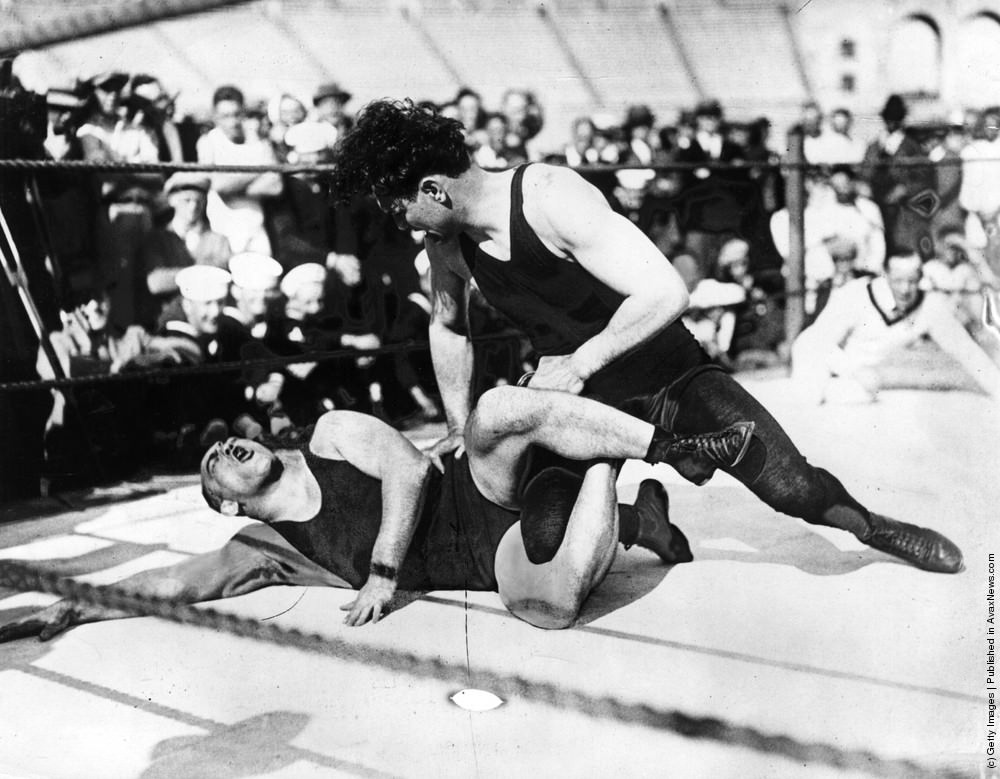
In the ring, the contest between Jack Dempsey and Bull Montana comes down to leverage and grit: one man sprawls on the canvas while the other presses in close, forearm and shoulder working for control. The wrestlers’ dark singlets and laced boots emphasize the utilitarian look of 1920s combat sports, where spectacle and toughness shared the same spotlight. Ropes cut across the frame, reminding you how small the squared circle could feel once bodies collided.
Crowds pack the background in layered rows, faces turned toward the action with the intensity of people who paid to see a decisive moment. The scene reads like a live event rather than a posed publicity still—officials and spectators hover near the apron, and the bright mat throws every strain of muscle into relief. Even without sound, you can sense the noise: shouts rising, feet shifting, and the hush that follows a sudden takedown.
Dempsey’s presence here is especially intriguing because the title points to wrestling rather than boxing, highlighting how famous fighters moved between arenas in the 1920s entertainment landscape. For readers searching vintage sports photography, early wrestling history, or Jack Dempsey in 1925, the image offers a vivid window into the era’s hybrid world of athletic competition and showmanship. It’s a tight, physical snapshot of momentum—captured at the instant when a match can swing with one hold.