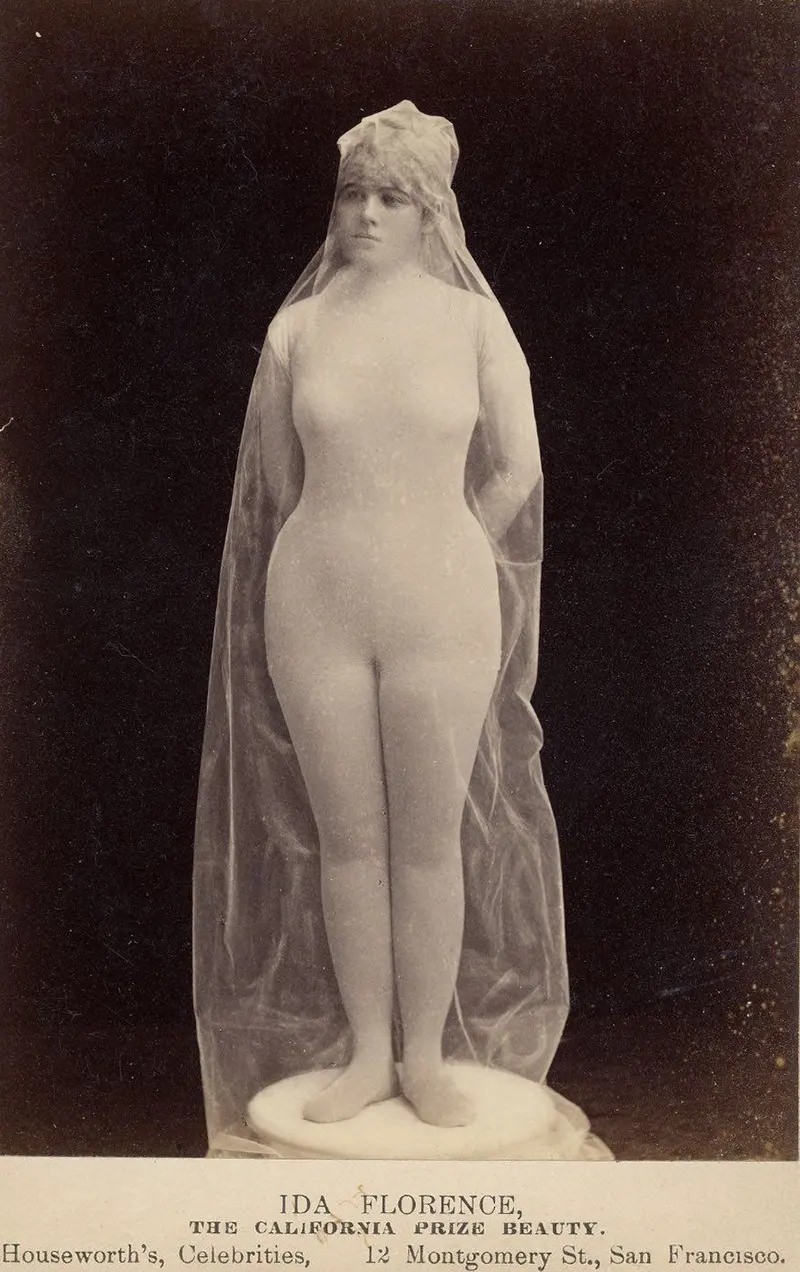
Ida Florence stands with the stillness of carved marble, her gaze turned slightly aside as if holding a pose between performance and portraiture. A fitted body stocking shapes a smooth silhouette, while a sheer, translucent fabric drapes from her head and falls in soft vertical folds to the floor, framing her figure like a classical veil. Set against a dark studio backdrop, the pale costume and skin-toned tones catch the light, heightening the illusion of a living statue.
Beneath the image, the printed caption names her “The California Prize Beauty,” a stage-ready title that speaks to the era’s appetite for spectacle, celebrity, and carefully marketed allure. The styling hints at Victorian burlesque and theatrical “tableaux” traditions, where dancers and performers posed as mythic or sculptural ideals to blend art, fashion, and suggestive entertainment. The transparent overlay is both costume and concept—modesty and display negotiated through fabric, lighting, and pose.
Studio photography of this kind helped circulate performers’ images far beyond the footlights, turning a momentary act into a collectible likeness. Details like the controlled lighting, simple set, and crisp typography anchor the photograph in late 19th-century popular culture, when costume innovation and persona were as important as choreography. For historians of fashion and culture, Ida Florence’s statue pose offers a vivid window into how Victorian-era burlesque aesthetics borrowed from classical art to legitimize and tantalize at once.