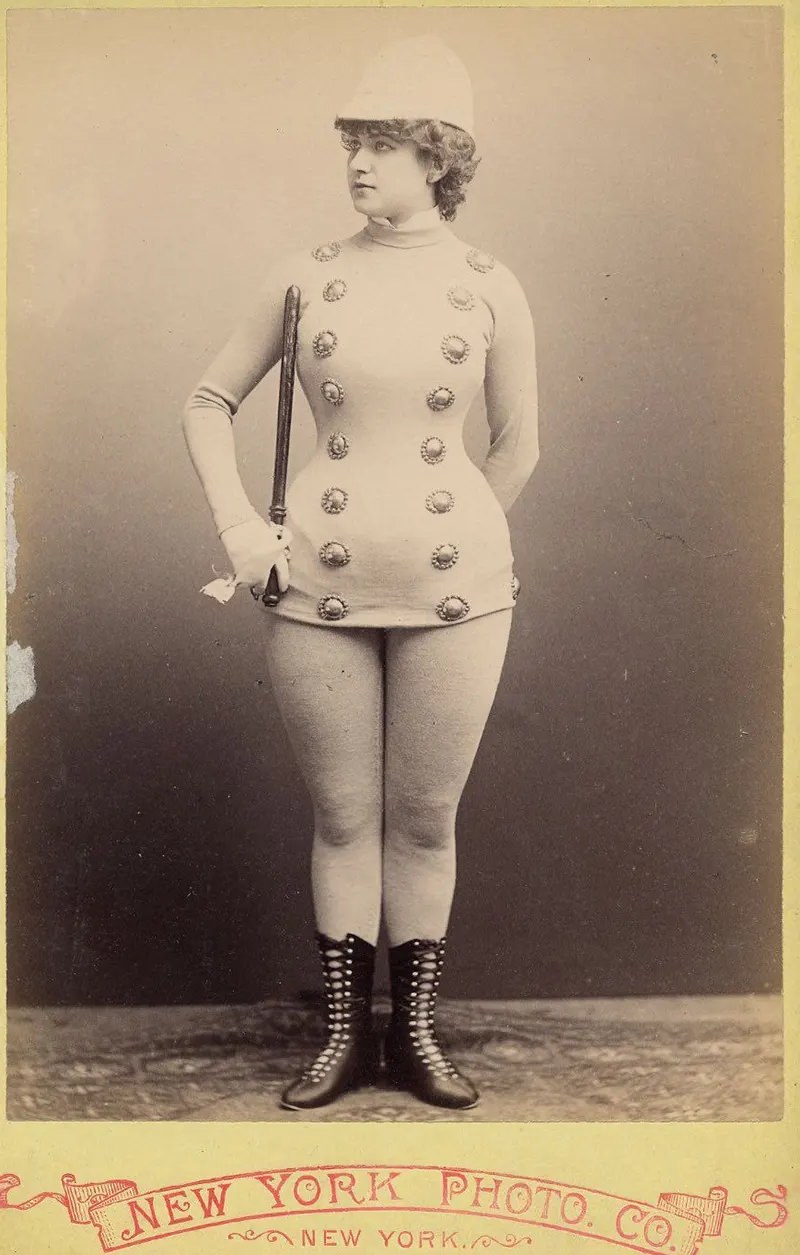
A burlesque performer stands in a studio pose, turned slightly to the side with a composed, almost defiant expression that feels made for the stage. Her costume reads like late-Victorian showmanship distilled: a pale, body-hugging outfit trimmed with rows of round decorative rosettes, paired with tall, lace-up boots that suggest both athletic movement and theatrical flair. In one hand she holds a slim baton or cane, a prop that hints at choreography, character work, or a comic skit typical of burlesque entertainment.
Details in the photograph reward a closer look, especially the contrast between modest coverage and bold silhouette—a tension that defined much of 1890s performance fashion. The high neckline and long sleeves keep to Victorian ideas of propriety, yet the fitted lines and short hem push toward spectacle, making the body itself part of the costume’s design. Her small cap and softly arranged hair complete the look, balancing playful costume elements with an air of professional polish.
The mount at the bottom reads “New York Photo. Co., New York,” anchoring the portrait in a commercial studio world that helped turn entertainers into recognizable figures through widely circulated prints. Such images promoted burlesque dancers and their “interesting costumes” while also documenting the era’s changing attitudes toward women in public, performance, and popular culture. As a piece of fashion and culture, it captures how late-19th-century stagewear borrowed from everyday dress, then exaggerated it into something unforgettable for audiences and collectors alike.