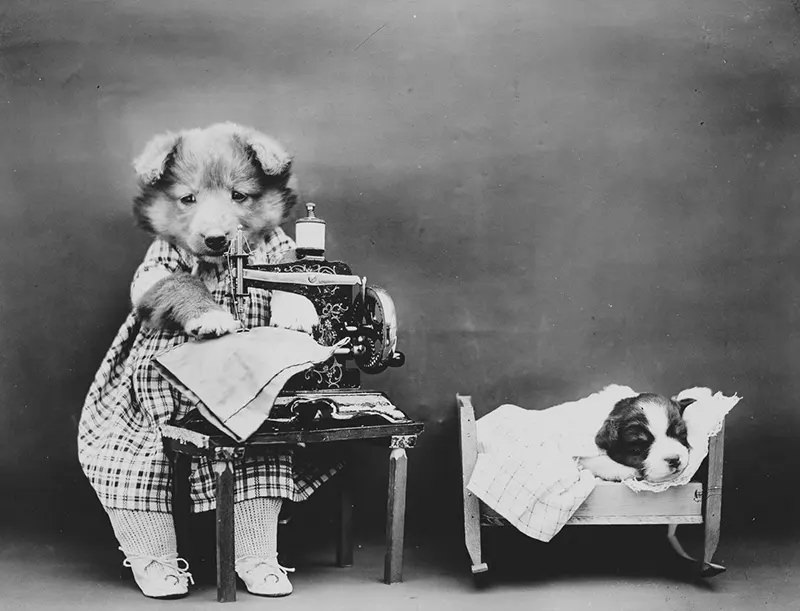
A small dog in a checked dress sits upright at a treadle-style sewing machine, paws posed as if guiding fabric under the needle with practiced care. The studio backdrop is plain, letting the elaborate metalwork of the machine and the tiny “work outfit” take center stage, turning a familiar domestic scene into a gently comic performance. Even without a caption, the prop-heavy setup points to the era when home sewing was an everyday skill and a prized household economy.
To the right, the punchline softens into something tender: another puppy lies tucked into a miniature bed, swaddled like an infant awaiting the next stitch. The contrast between “busy seamstress” and “sleeping baby” is unmistakable, and it’s easy to imagine this image originally delighting readers as a playful twist on family life. The careful staging—clothes, furniture, and tools scaled to match—reveals how much craftsmanship went into making the joke land.
“Making Baby’s Clothes” works because it borrows the language of work and care, then hands it to two animals with complete seriousness. For collectors and casual browsers alike, the photo offers a charming window into early novelty photography, when visual gags were built with real props and patient posing rather than quick edits. It’s a funny scene, yes, but it also echoes the history of sewing, home labor, and the enduring appeal of animals dressed for human roles.