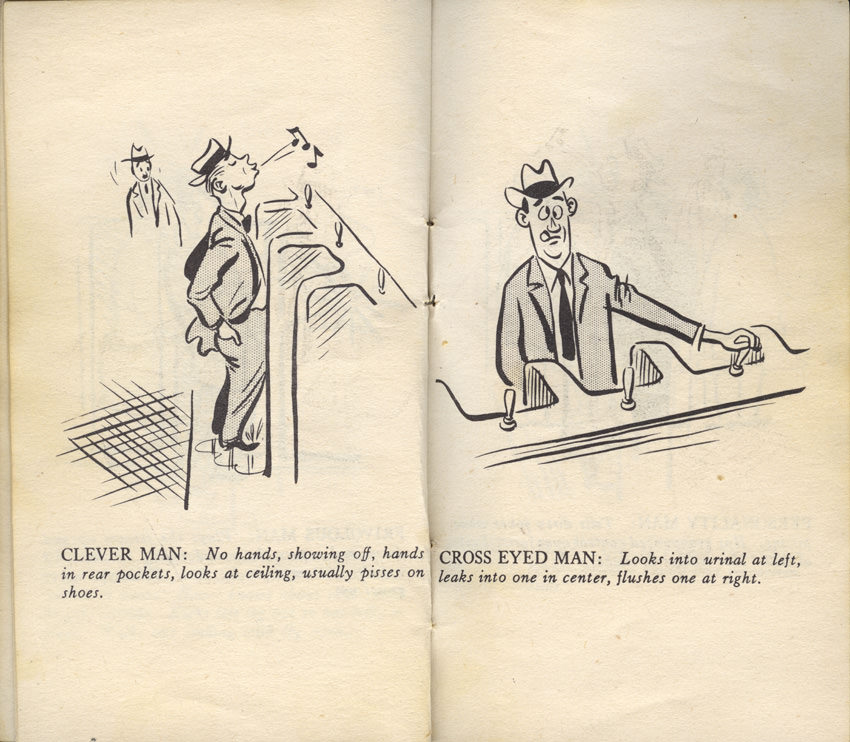
A small, cheeky cartoon spread titled “Clever Man vs Cross Eyed Man” delivers the kind of barroom humor that once circulated in pocket-sized joke books and novelty pamphlets. On the left page, a dapper figure in hat and suit stands at a row of urinals with exaggerated confidence, while musical notes and loose, lively linework push the gag into slapstick territory. The caption plays narrator, framing him as a show-off who keeps his hands in his pockets and looks up at the ceiling—only to “usually” miss his mark.
Across the fold, the punchline shifts from swagger to confusion as a second character—wide-eyed and anxious—manages to do three things at once: aim left, leak center, and flush right. The humor relies on cartoon shorthand rather than realism, with simplified fixtures and expressive faces making the scene readable at a glance. It’s a reminder that everyday spaces, even restrooms, were fair game for comedic observation and social satire.
For collectors of vintage humor, cartoon ephemera, and oddball social history, this image offers a candid glimpse into the jokes people once shared without a second thought. The period styling—fedora-like hats, suit silhouettes, and bold ink contours—helps date the sensibility even when the exact source isn’t spelled out. Whether you’re here for the title alone or the gleefully crude captions, “Clever Man vs Cross Eyed Man” is a memorable example of how humor was printed, packaged, and passed around in a different era.