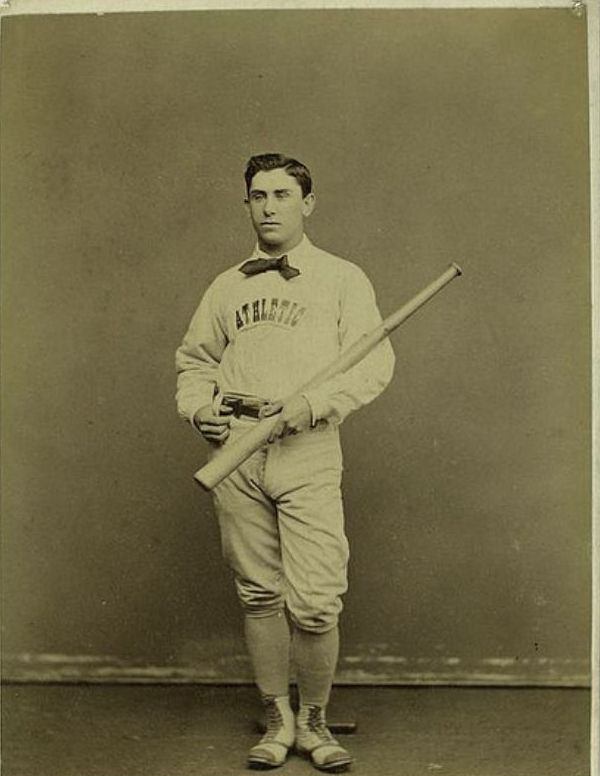
Long before action photography could freeze a slide into second or the crack of a bat, baseball players stepped into quiet studios and posed for the camera with deliberate pride. Here, a uniformed athlete stands against a plain backdrop, gripping a bat as if it were both tool and symbol, his expression steady and unsmiling. The scene feels formal, almost ceremonial—an early sports portrait meant to present character as much as skill.
Details in the clothing pull you straight into 19th-century baseball: a high-collared shirt with a bow tie, a belted waist, knee-length pants, and tall stockings, all carefully arranged for a sitter who had to hold still. The bat is angled across his body, echoing the staged compositions common in studio photography of the era, when equipment served as a visual shorthand for profession. Even without a ballpark or teammates in view, the image communicates athletic identity through posture, uniform, and props.
For collectors and historians, these studio photos of early baseball players offer a rare look at how the sport wanted to be seen—orderly, respectable, and modern. They also invite closer reading: the lettering across the chest hints at team affiliation, while the minimal set keeps attention locked on the player and the era’s evolving sportswear. Posts like this help trace baseball’s visual history, from posed portraits to the later, kinetic tradition of game-day action shots.