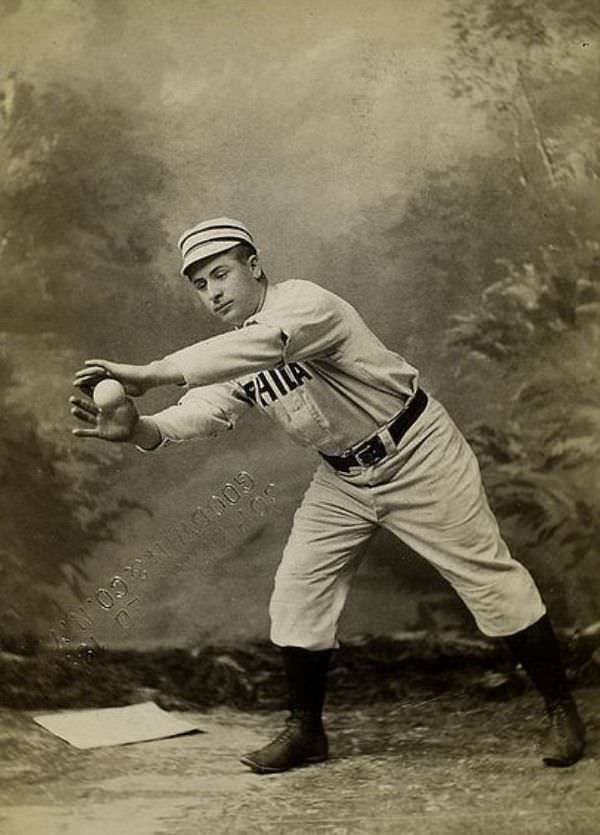
Long before telephoto lenses and highlight reels, baseball players stepped into studios to manufacture motion in perfect stillness. Here, a uniformed athlete is frozen mid-play, arms extended to cradle a ball, as if the next beat would bring a clean catch and a quick throw. The painted backdrop of soft trees and sky turns the studio into an imagined ballfield, a stage where America’s new pastime could look both athletic and dignified.
Details reward a closer look: the cap with contrasting bands, the heavy belt cinched tight, tall dark stockings, and sturdy shoes built for rough ground rather than polished floors. A block of lettering stretches across the chest, while the player’s focused expression sells the illusion of real competition. Even the faint studio markings and scuffs near the floor hint at how carefully these “action shots” were composed, posed, and repeated until they felt true.
For collectors and fans of sports history, images like this are a reminder that 19th-century (and early) baseball was as much about presentation as performance. Studio portraits helped shape public identity—turning players into recognizable figures, uniforms into symbols, and the game itself into something modern and marketable. This post explores that in-between world where the camera, the studio painter, and the athlete collaborated to create baseball’s earliest visual legends.