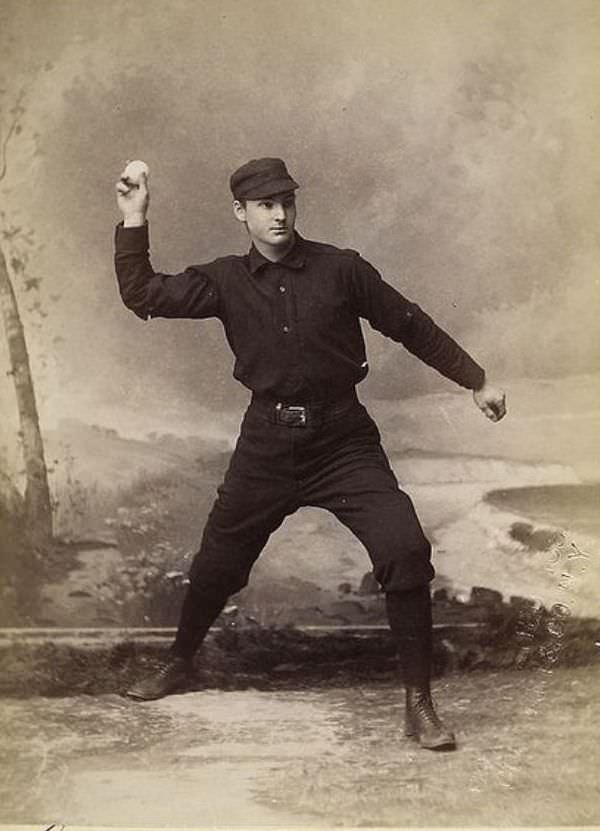
A pitcher’s pose is frozen mid-throw, one arm cocked high with the ball visible while the other stretches for balance, as if the studio floor were a dusty diamond. The player wears a dark, buttoned uniform with a cap, belt, and high socks, projecting the tidy, workmanlike look of early baseball before modern logos and flashy colors. Behind him, a painted backdrop suggests an outdoor landscape, a theatrical stand-in for the ballpark that underscores how carefully these “action” moments were staged.
Before action photography could reliably catch motion on the field, studio portraits like this offered fans and clubs a way to present athletic identity and technique. The stance reads like instruction as much as performance—weight set, shoulders turned, arm ready to deliver—inviting viewers to imagine the next instant rather than actually see it unfold. That tension between realism and artifice is part of what makes 19th-century baseball imagery so compelling: sport translated into a pose, then preserved as a collectible photograph.
Collectors and baseball history readers will recognize how these early studio sports photos bridge personal portraiture and the emerging culture of professional athletics. Details such as the plain uniform, the formal set, and the deliberate “before action” choreography help date the mood even when names and teams aren’t labeled. For anyone exploring vintage baseball players, early pitching form, or the roots of sports photography, this image offers a vivid glimpse of the game’s first era of star-making.