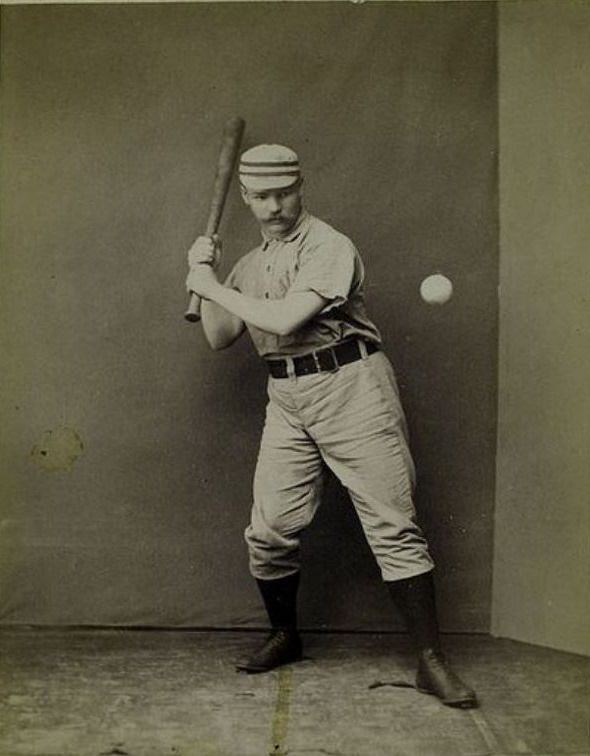
A batter stands in a studio corner, legs braced and shoulders turned, gripping a thick wooden bat as if the next pitch is already on its way. The plain backdrop and hard floor keep the focus on posture and equipment, while a ball appears suspended in midair beside him, lending the pose a surprising sense of motion. It’s a carefully arranged moment—part athletic demonstration, part photographic theater—made for an era before candid sports photography became common.
Look closely at the uniform details and you can feel the 19th-century game taking shape: a simple cap, a buttoned shirt, a wide belt, and high socks pulled up for play. The stance is formal yet confident, suggesting both training and showmanship, as though the player is modeling what “ready” looks like for fans who might never get close to the field. Even without a stadium in view, the image communicates baseball’s growing identity through clothing, tools, and attitude.
For readers interested in early baseball history, these studio portraits are valuable precisely because they freeze the sport at a crossroads between pastime and profession. They reveal how athletes wanted to be seen—disciplined, tough, and unmistakably tied to the bat-and-ball game—long before action shots, trading cards, and press photography defined sports culture. This post pairs nostalgia with visual evidence, offering a crisp window into how 19th-century baseball players presented themselves when the camera demanded stillness.