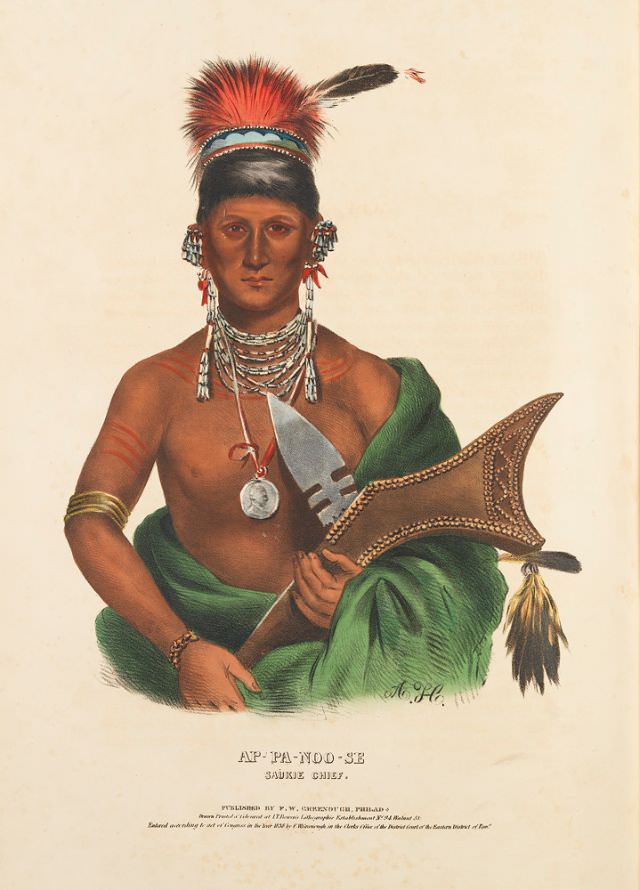
Ap-Pa-Noo-Se is presented in a formal, carefully composed portrait that reads like both artwork and historical record. The figure faces the viewer with a steady, reserved expression, framed by a feathered headdress and layered jewelry that immediately draws the eye. Beneath the image, the caption identifies him as a “Saukie Chief,” anchoring the portrait’s purpose as a named representation rather than a generic “Native American” type.
Color and detail do much of the storytelling here: a green wrap falls over one shoulder, while arm bands and painted markings accent the skin with rhythmic lines. A prominent metal blade—shaped like a broad spear point—rests in his hands, paired with an ornate wooden form edged in decorative beadwork or stitching, suggesting ceremonial display as much as practical use. The artist’s attention to texture, from feathers to necklaces, turns the portrait into a study of regalia and status.
For readers interested in Indigenous history and early American visual culture, this portrait offers a window into how Native leaders were documented and circulated through prints. It invites questions about the moment of contact in which such images were produced—who commissioned them, how they were interpreted by distant audiences, and what they leave unsaid about the person portrayed. As a WordPress feature, “Ap-Pa-Noo-Se, Saukie Chief” works well for searches related to Sauk leadership, Native American portraits, and nineteenth-century printmaking and illustration.