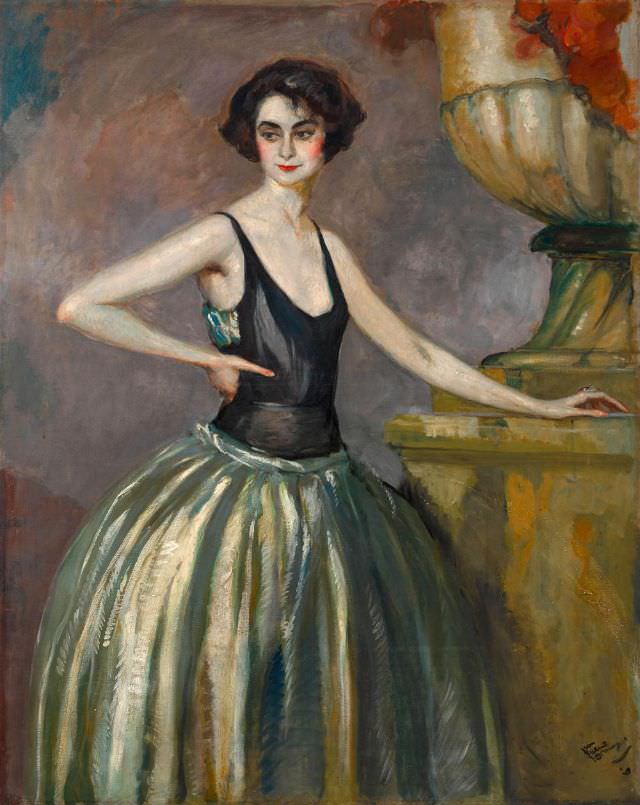
A poised young woman stands in three-quarter view, her hand planted at the waist with the quiet certainty of a performer between movements. The dark, sleeveless bodice contrasts with a voluminous tutu that catches the light in soft, silvery strokes, while her short, waved hair and lightly rouged cheeks evoke the unmistakable mood of the 1920s. Rather than forcing a theatrical smile, she meets the viewer with a composed gaze that feels both intimate and self-possessed.
Painted with a loose, expressive touch, the portrait balances elegance and atmosphere: a muted, smoky background sets off the figure, and the broad swells of fabric are built from quick highlights and shadowed folds. At the right edge, a monumental stone urn and pedestal add a classical note, anchoring the scene in the visual language of studios, salons, and stage-inspired interiors. The result is an artwork that reads as both costume portrait and modern character study.
“Portrait de femme au tutu, 1920” invites a closer look at how dance and fashion intersected with portraiture in early twentieth-century art. The tutu becomes more than a garment—it’s a symbol of discipline, spectacle, and the era’s shifting ideas of femininity, presented with painterly confidence. Ideal for readers searching for a 1920 portrait, ballet-inspired artwork, or vintage French art themes, this piece offers a refined glimpse into a world where performance and identity share the same frame.