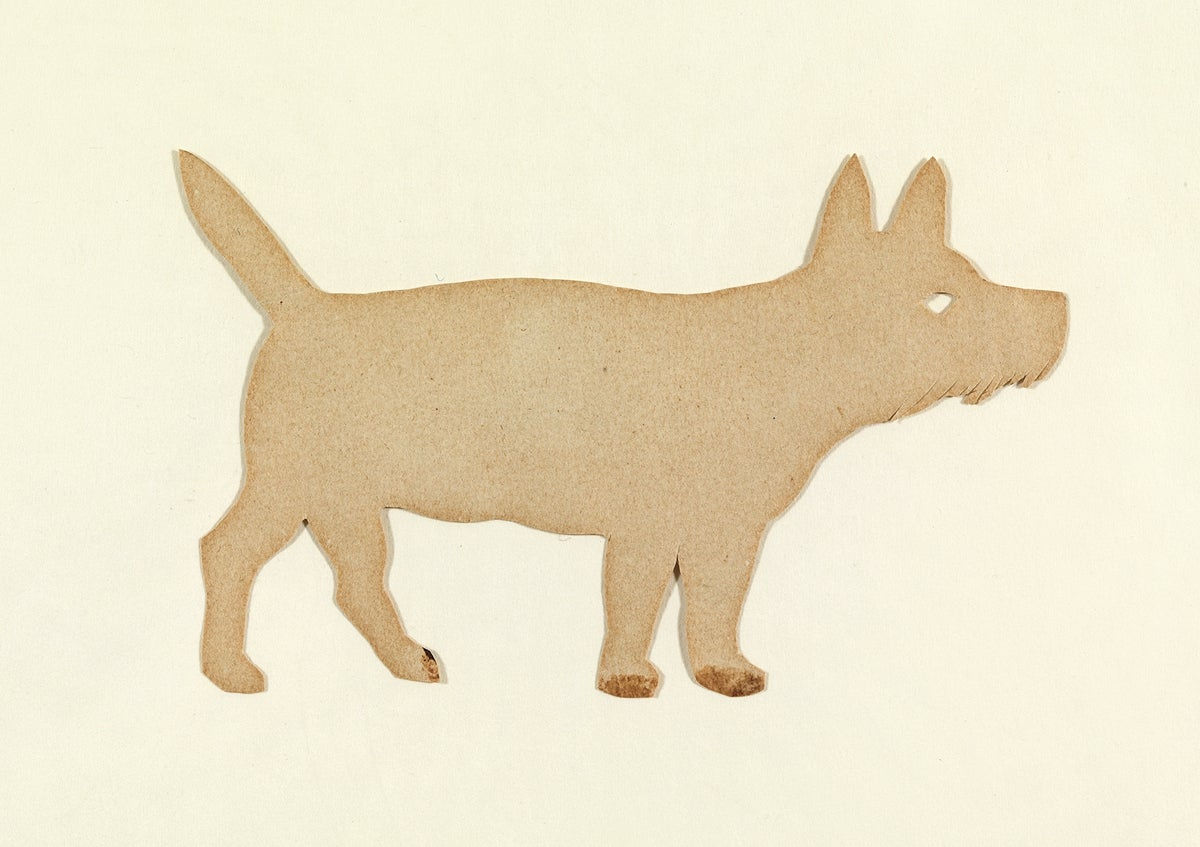
A small animal silhouette—cut from plain, brown paper—stands in profile against an open field of white, its upright ears and stiff tail suggesting a dog rendered with affectionate economy. The edges are slightly rough, the eye a simple punched shape, and the modest irregularities of the legs and muzzle reveal the hand at work, not a machine. In its restraint, the form feels both playful and decisive, the kind of quick invention that turns everyday material into a memorable figure.
Paper cut-outs occupy a fascinating corner of Pablo Picasso’s practice, where collage, drawing, and sculpture seem to meet in a single gesture. Works like this point to an artist thinking through shape first—trimming away detail to let contour do the storytelling—while also embracing the humble textures of paper as part of the composition. The result reads almost like a paper mosaic in one piece: a crisp silhouette that relies on negative space for clarity and presence.
For readers searching for Picasso rare cut-paper artworks, this historical image offers a quiet reminder that modern art is often built from the simplest tools: scissors, paper, and a sharp eye for character. The dog’s pared-down outline still carries movement and attitude, inviting a closer look at how line, shadow, and empty space can suggest life. As a WordPress feature, it works beautifully as both an art-history curiosity and a meditation on how little it takes to make an image endure.