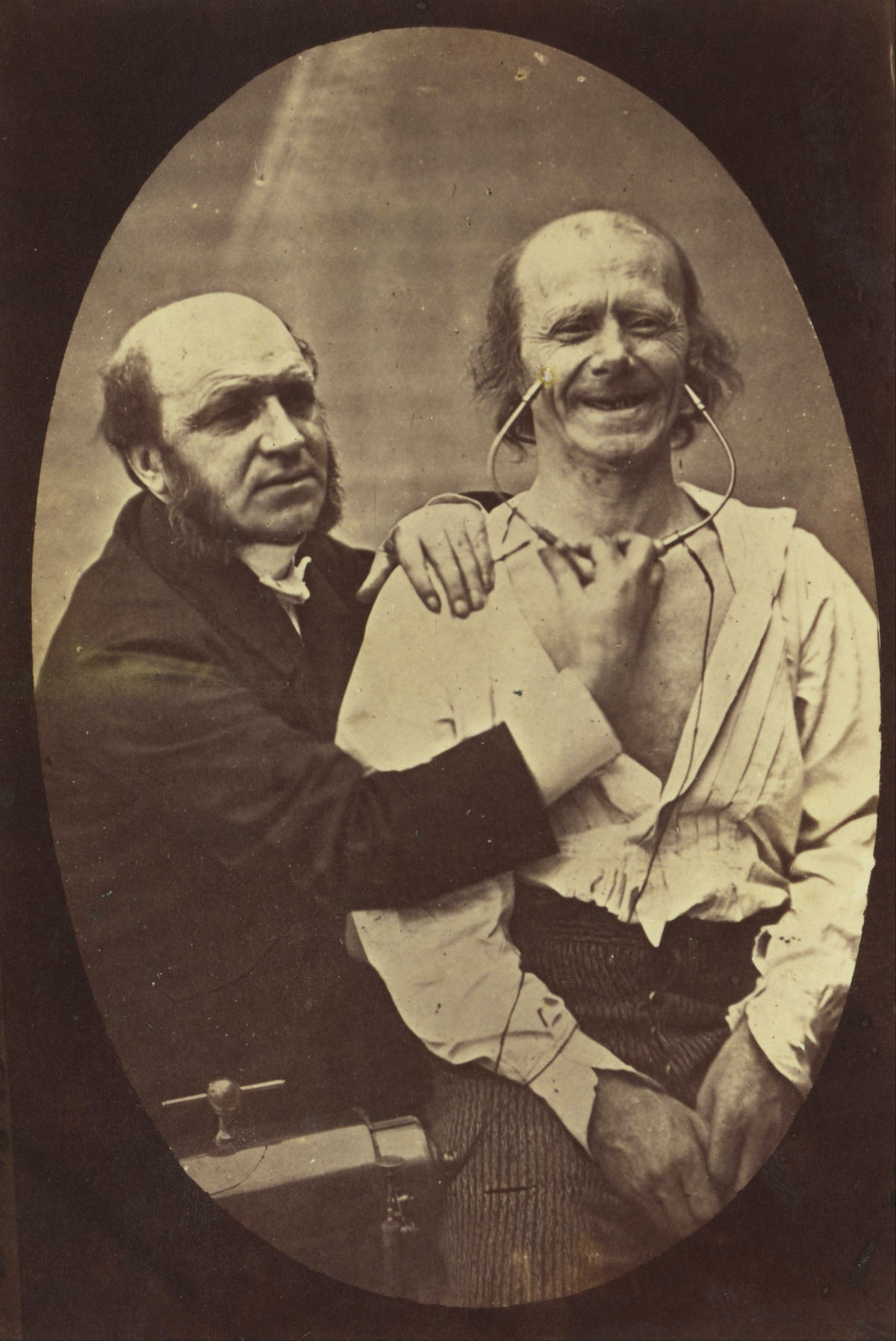
A tense intimacy hangs in this oval-framed scene: one man stands close behind another, steadying him with a hand on the shoulder while thin wires and small electrodes frame the sitter’s cheeks. The subject’s face is pulled into an unmistakable grimace-smile, a look that feels both performative and involuntary, as if emotion has been turned into something measurable. Even the worn shirt and exposed chest add to the sense that we’re witnessing a procedure rather than a portrait.
Guillaume-Benjamin-Amand Duchenne de Boulogne’s work on human physiognomy sits at the crossroads of early neuroscience, medical experimentation, and the birth of photographic illustration. These striking images were made to demonstrate how specific facial muscles shape expressions, turning the human face into a kind of map for feeling. As historical documents, they offer a rare view of how science once tried to catalog the mechanics of joy, pain, surprise, and fear with clinical precision.
For today’s viewer, the appeal lies in the uneasy blend of art and inquiry: dramatic lighting, direct staging, and the raw immediacy of a real person under examination. Collectors and researchers searching for “Duchenne de Boulogne physiognomy,” “facial expression photography,” or “history of medical illustration” will recognize why these illustrations remain so influential. They invite reflection on how we read faces, how photographs can claim authority, and how the pursuit of knowledge can leave an indelible mark on the people caught in its lens.