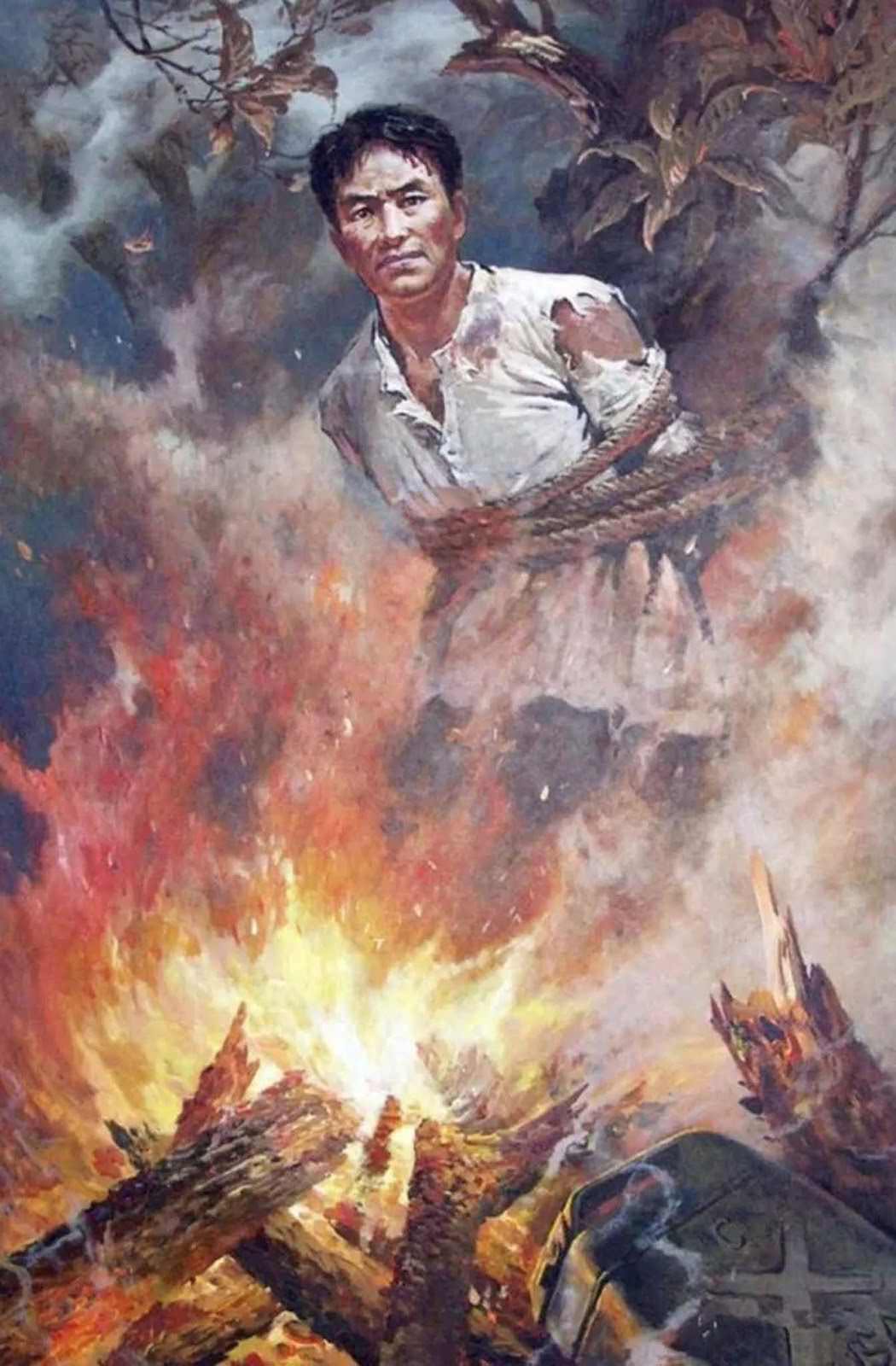
A lone figure, bound at the waist and half-swallowed by smoke, meets the viewer’s gaze while flames churn through splintered timber below. The scene is rendered as dramatic artwork rather than a straightforward documentary photograph, using hot reds and yellows against a bruised, ashen background to heighten the sense of catastrophe. With torn clothing and tense posture, the man becomes a symbol of civilians caught in violence, framed by twisted branches and a sky that feels thick with soot.
North Korea alleges 35,000 people were killed—a claim that, whether read as accusation, propaganda, or wartime accounting, points to the central struggle over numbers in modern conflict: who is counted, who is believed, and who is remembered. Images like this circulate not only to inform but to persuade, translating mass death into a single, unforgettable body in peril. The composition invites questions about how tragedy is communicated when access is limited and narratives compete for global attention.
Seen today, the piece sits at the crossroads of history and memory, where atrocity allegations and visual storytelling reinforce each other. For readers searching the Korean War era, North Korean claims, or historical wartime art, it offers a stark entry point into the language of suffering used by states and artists alike. Beyond the headline figure, the most haunting detail remains the direct stare—an insistence that behind every statistic is a human life pressed up against fire and fear.