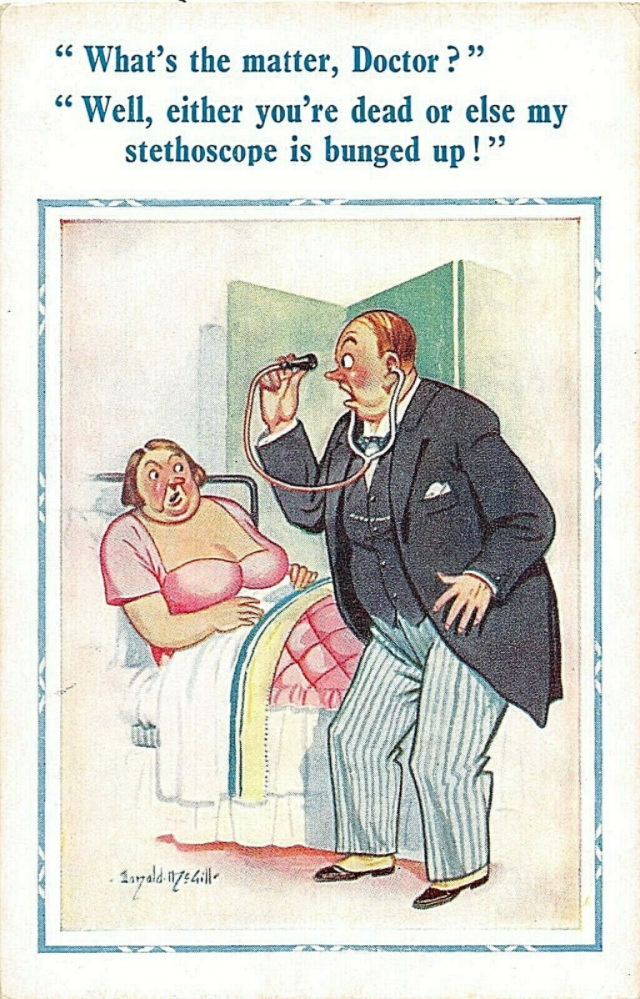
A bawdy punchline sits right at the top—“What’s the matter, Doctor?” followed by the physician’s deadpan reply about a “bunged up” stethoscope—setting the tone for one of Donald McGill’s unmistakable early 1900s comics. In the scene below, a stout, wide‑eyed patient reclines in bed while a rotund doctor in a dark coat and striped trousers fusses with his earpiece, turning a simple bedside exam into a visual gag. The clean border, bold caption lettering, and bright flat colors make it read like a classic saucy postcard illustration meant to be understood at a glance.
McGill’s humor relies on exaggerated bodies, theatrical expressions, and a slightly risqué misunderstanding, all framed in the familiar setting of a medical visit. Details like the hospital screen, the quilted blanket, and the doctor’s attentive posture ground the joke in everyday life, even as the caption pushes it into absurdity. The drawing style—rounded faces, simplified shading, and punchy contrast—captures the popular comic art language of the era, when cheeky one-liners and stereotypes sold by the thousands.
For readers interested in vintage British humor, early 20th‑century illustration, and Donald McGill postcards, this artwork offers a compact look at what made these comics so widely circulated. It’s also a reminder that laughter in the past often came wrapped in social attitudes that feel dated today, especially in how women’s bodies are used as the centerpiece of the joke. Whether you’re here for nostalgia, art history, or the evolution of gag cartoons, this “fat lady” doctor scene is a vivid example of the period’s punchline-driven popular culture.