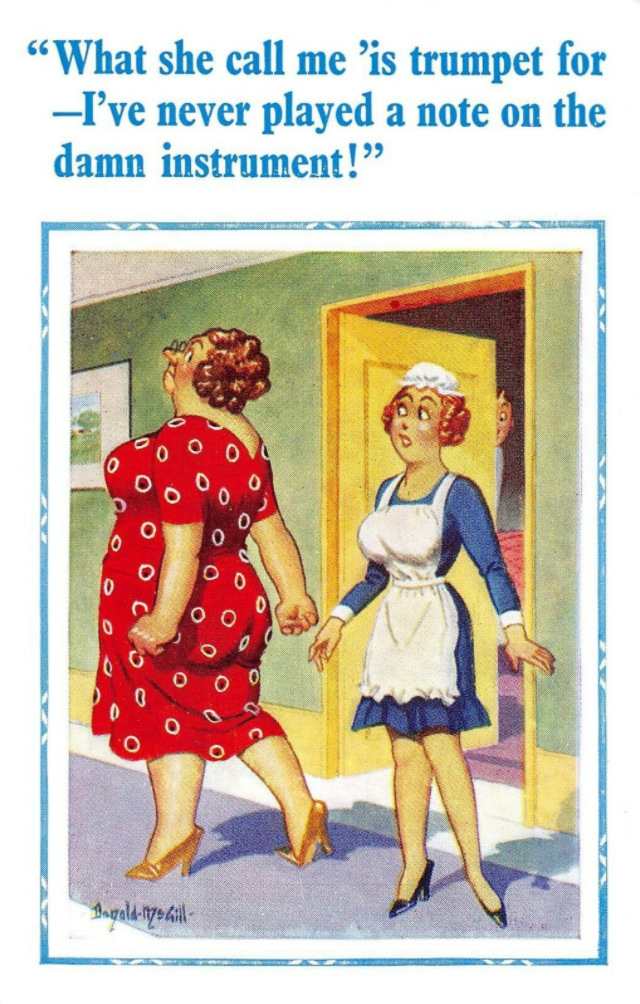
A punchline sits right at the top—“What she call me ’is trumpet for—I’ve never played a note on the damn instrument!”—setting the tone for Donald McGill’s cheeky early-1900s postcard humor. Beneath the caption, a bold, brightly colored cartoon scene unfolds: a stout woman in a red dress with circular patterns strides away, while a startled maid in a blue dress and white apron freezes in the doorway, eyes wide at whatever has just been said or done. The whole composition leans into exaggeration and quick, readable character acting, the kind of visual shorthand that made these comics instantly legible at a glance.
McGill’s style thrives on theatrical poses and social tension, turning an ordinary domestic interior into a stage for innuendo and misunderstanding. The humor here hinges on wordplay and implication, with the “trumpet” remark delivering a double meaning that would have been familiar to postcard buyers of the era. Clothing details—the maid’s cap and apron, the walking heels, the tidy room—help frame the class dynamics that so often powered this genre of saucy British comic art.
For collectors and readers interested in antique humor, Donald McGill postcards like this offer a revealing window into popular entertainment before modern mass media took over. They’re part caricature, part social snapshot, reflecting both the era’s taste for racy jokes and the stereotypes that circulated through everyday ephemera. If you’re exploring early 1900s artworks, vintage comic postcards, or the history of Donald McGill’s “saucy” illustrations, this piece is a vivid example of how a single line and a single glance could carry an entire gag.