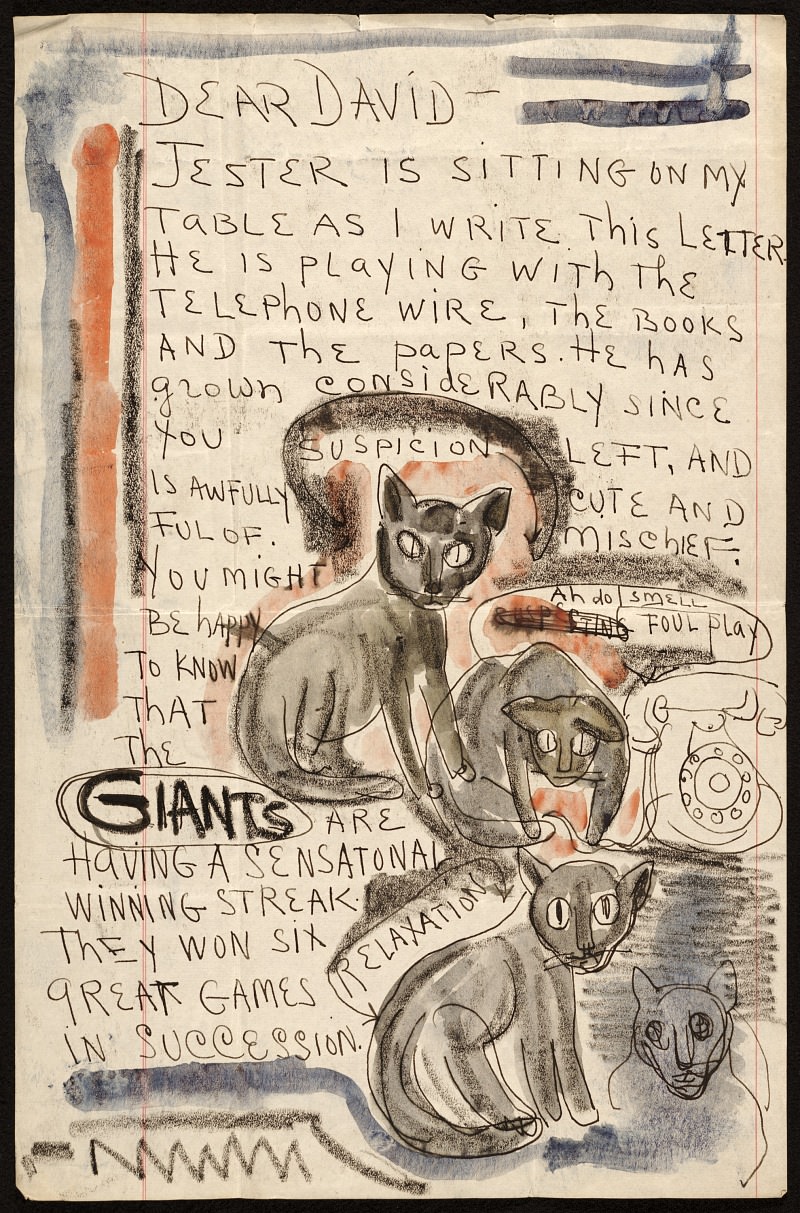
“Dear David—” opens the page in large, confident handwriting, and the rest reads like a conversation carried across distance in the 1940s. Moses Soyer writes with warmth and immediacy, letting everyday details do the work of connection: a cat perched on the table, curiosity “full of suspicion,” and the small mess of books, papers, and telephone wire that makes a home feel lived-in. The sheet itself—lined like a ledger, worn at the edges—adds a tactile sense of time, as if you can picture it being folded, mailed, and unfolded again.
Alongside the words, Soyer turns the letter into an artwork, sketching several cats with expressive, alert faces and long, looping tails. Washes of muted color and soft shading sit beneath the ink, while playful captions (“Ah do I smell foul play”) and a bold, stamped-like word—“GIANTS”—break the page into lively zones. Even a doodled rotary phone appears, anchoring the scene in the era’s domestic technology and hinting at how family news traveled when voices couldn’t always.
What makes this historical piece so compelling is its blend of private correspondence and visual storytelling: a father speaking to his son while drawing the world around him. The mention of a “sensational winning streak” gives the letter a casual, contemporary pulse, contrasting with the tenderness of observing a pet’s antics and growth. For readers interested in Moses Soyer, 1940s letters, and the intersection of art and everyday life, this page offers an intimate glimpse of affection, humor, and creativity preserved in ink and watercolor.