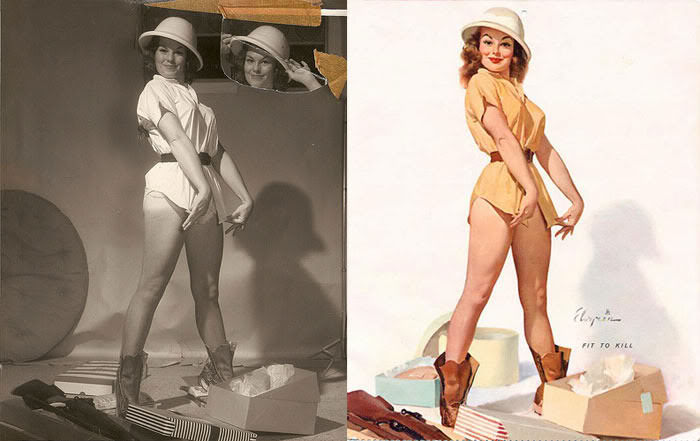
Between the studio floor and the finished canvas lies a fascinating transformation, and this post puts it on full display. On one side, a candid behind-the-scenes reference photo shows a pin-up model posing under simple lighting, surrounded by props and backdrops that feel more practical than glamorous. On the other, that same pose reappears as a polished painting—skin tones warmed, edges softened, and the whole scene distilled into an idealized moment built for mass appeal.
Looking closely reveals how pin-up art was constructed: not merely “copied,” but edited into a carefully balanced fantasy. The artist streamlines the background clutter, refines proportions, and heightens the sheen of fabric, hair, and expression, turning a working set into a clean, iconic tableau. Even small decisions—how the shadows fall, how the smile reads, how the colors flatter—show the deliberate craft behind mid-century illustration and the visual language of glamour.
What makes the comparison so compelling is the reminder that these “incredibly beautiful paintings” began with real women in real studios, holding poses, adjusting hats, and working with photographers to create usable reference. The before-and-after pairing invites readers to consider beauty standards, commercial art techniques, and the human labor behind classic pin-up imagery. For anyone interested in vintage illustration, pin-up models, and the editing process that shaped popular art, it’s a revealing look at how fantasy was made.