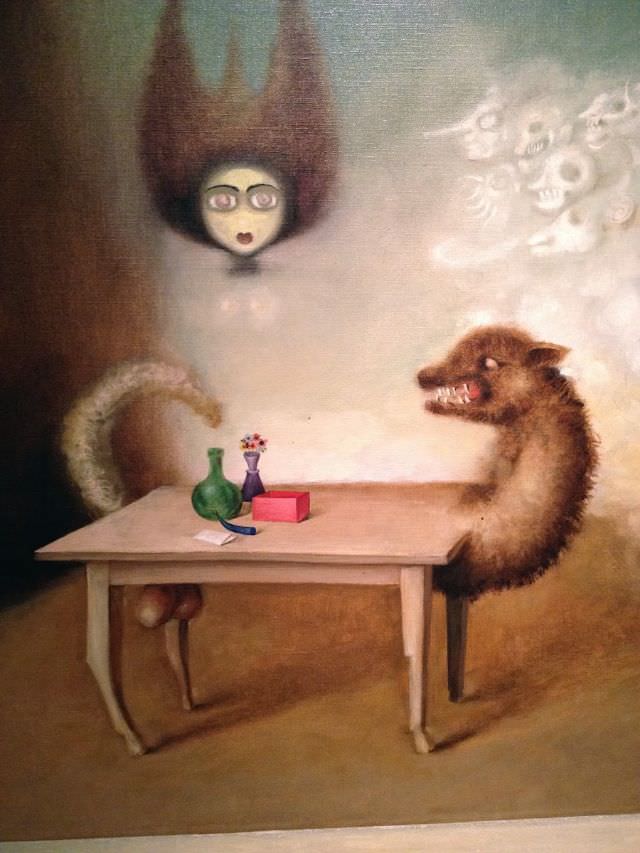
Unease hangs in the air of “Psychological Space, 1939,” where a plain tabletop still life—bottles, a small vase of flowers, a red box, and a slip of paper—sits in the foreground like a fragile attempt at order. The surrounding room refuses to stay domestic: animal forms press in from both sides, one with a long curling tail, another with bared teeth and bristling fur, as if instinct has taken a seat at the table. Above them floats a pale, mask-like face with wide eyes, suspended in a wash of muted color that feels more like a memory than a wall.
Painted space becomes mental space here, with each object acting like a symbol that never fully resolves. The carefully arranged items suggest routine and civility, yet they are dwarfed by looming, half-seen bodies and the strange apparition overhead, turning a simple interior into a stage for anxiety. Wisps of cloudy shapes in the upper right read as faces or skulls depending on your mood, reinforcing the title’s promise that what matters most is not architecture, but perception.
For a WordPress post focused on historical art and surrealist imagery, this 1939 artwork offers rich material: a dreamlike composition, tense psychological atmosphere, and striking contrasts between still life detail and uncanny figures. The palette’s smoky browns and grays deepen the sense of confinement while directing the eye back to the table—an island of everyday objects surrounded by the irrational. Whether read as allegory, nightmare, or visual experiment, “Psychological Space, 1939” remains a compelling reminder that the most unsettling rooms are often the ones built in the mind.