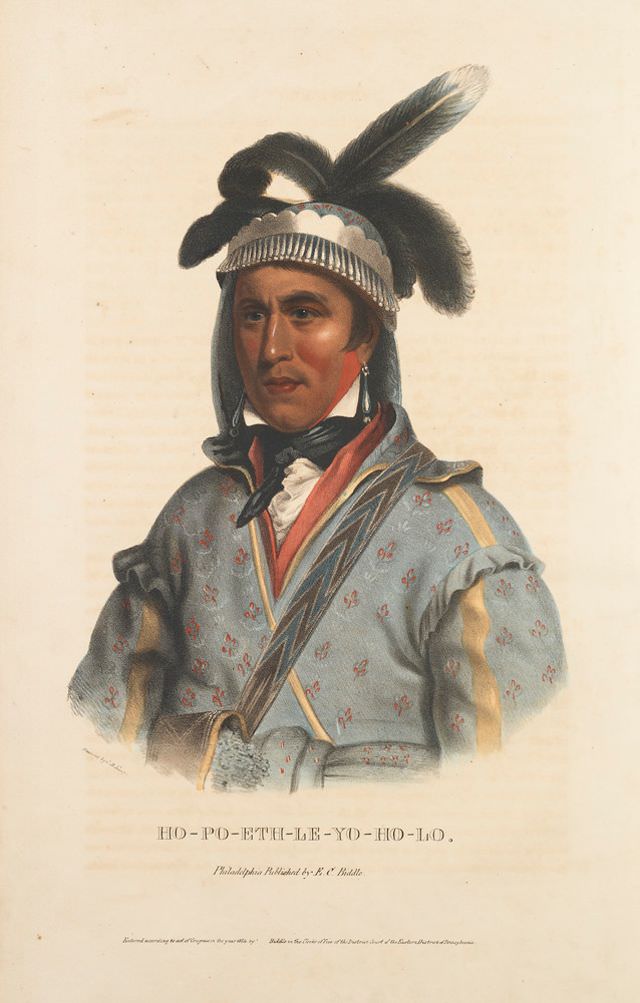
Ho-Po-Eth-Le-Yo-Ho-Lo appears here in a carefully rendered, hand-colored portrait that reads as both artwork and document. The sitter is shown from the waist up against a pale, open background, allowing the eye to settle on the confident posture and the composed, direct gaze. Fine shading across the face and neck gives the figure a lifelike presence, suggesting the artist’s intent to record individuality rather than a generic “type.”
Dress and adornment carry much of the story: a feathered headdress rises above a band with a bright, reflective edge, while long side ornaments frame the face. A patterned blue garment, dotted with small motifs and trimmed in lighter tones, is secured with a strap running diagonally across the chest, hinting at the practical as well as ceremonial dimensions of clothing. The touches of red at the cheeks and around the neckline heighten the portrait’s immediacy, reminding modern viewers that many so-called “old photos” and prints of the era were originally experienced in color.
As a historical image, this piece invites questions about how Indigenous identity was presented, circulated, and consumed through published portraits. The printed title beneath the figure—“Ho-Po-Eth-Le-Yo-Ho-Lo”—anchors the work in a tradition of captioned likenesses that traveled far beyond the person depicted, shaping public imagination through art and printmaking. For readers searching for Indigenous portrait art, early American prints, or hand-colored historical illustrations, this post offers a close look at visual storytelling where clothing, expression, and technique speak as loudly as any written record.