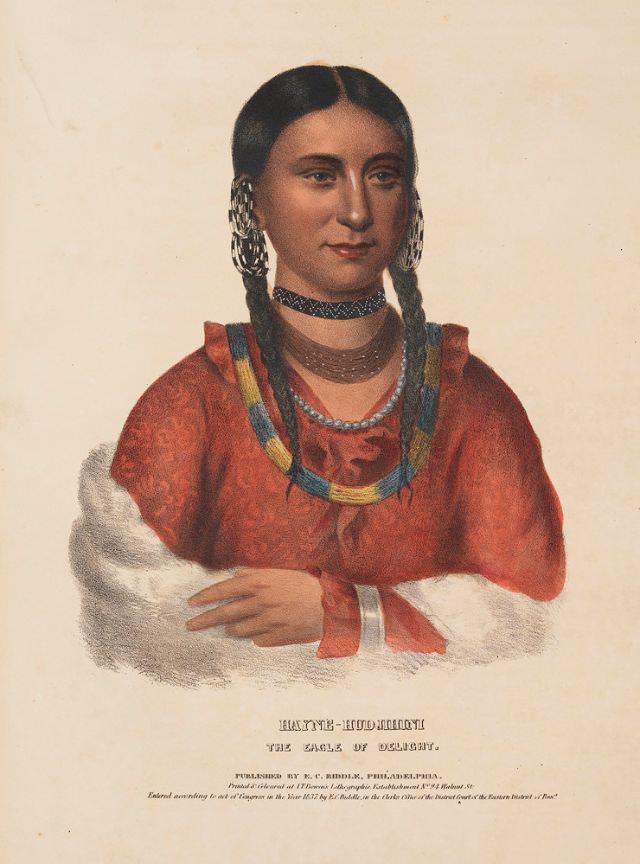
Hayne-Hudjihini, remembered here as “The Eagle of Delight,” meets the viewer with a composed, direct gaze that feels both intimate and formal. The portrait’s careful color work draws attention to her braided hair, the glint of long earrings, and the layered necklaces that frame her face and neckline. A soft, light background keeps the focus on her presence, letting expression and adornment carry the story.
Rich textiles and deliberate details shape the atmosphere of the artwork: a deep red garment, patterned bands of color, and a pale wrap gathered across her arms. The artist’s steady lines and gentle shading suggest a studio-made likeness rather than a quick sketch, aiming for clarity and dignity. Even without additional context, the title invites readers to consider how names and epithets were used to translate identity into the language of collectors and print culture.
For WordPress readers exploring historical portraits, Indigenous representation in art, or early printed illustrations, this image offers a strong starting point for reflection and research. It works well in posts about visual culture, dress and material history, and the ways nineteenth-century publications presented people to distant audiences. Use it as a focal point for discussing how portraiture can preserve individuality while also revealing the biases and framing of the era that produced it.