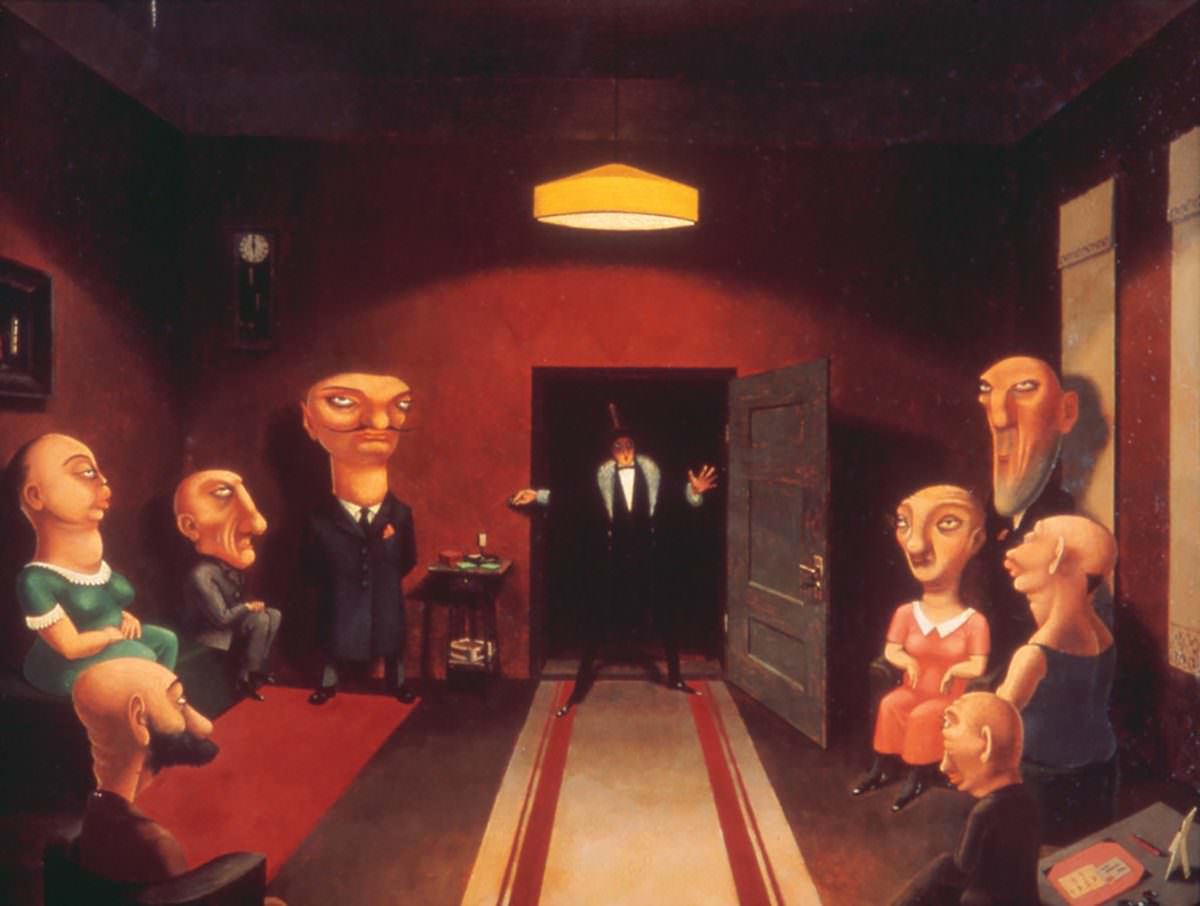
A door stands ajar in a dim, reddish room, and a sharply dressed figure appears in the threshold as if arriving from a night outside the frame. Overhead, a single lamp casts a warm, focused glow that turns the entryway into a small stage. Around it, a cluster of onlookers—faces elongated, eyes heavy-lidded, bodies angled toward the newcomer—hold the hush of expectation that makes “Nocturnal Homecoming, 1927” feel both intimate and uneasy.
The setting reads like a private interior: a wall clock, a small side table with scattered items, and a narrow runner rug guiding the eye straight to the open doorway. The color palette leans into deep browns and reds, evoking late-evening lamplight and the claustrophobic comfort of rooms where conversations linger. Rather than offering documentary clarity, the work uses stylized proportions and theatrical composition to suggest a story—arrival, judgment, reunion, or interruption—without spelling it out.
As a piece for readers interested in 1920s art and atmospheric historical imagery, this scene invites slow looking and interpretation. The tension between domestic details and exaggerated figures creates a dreamlike realism, the kind that makes a homecoming feel less like relief and more like a reckoning. Whether you approach it as symbolic narrative or period mood, “Nocturnal Homecoming, 1927” offers a memorable glimpse into the era’s fascination with modern identity, interior life, and the drama of the everyday.