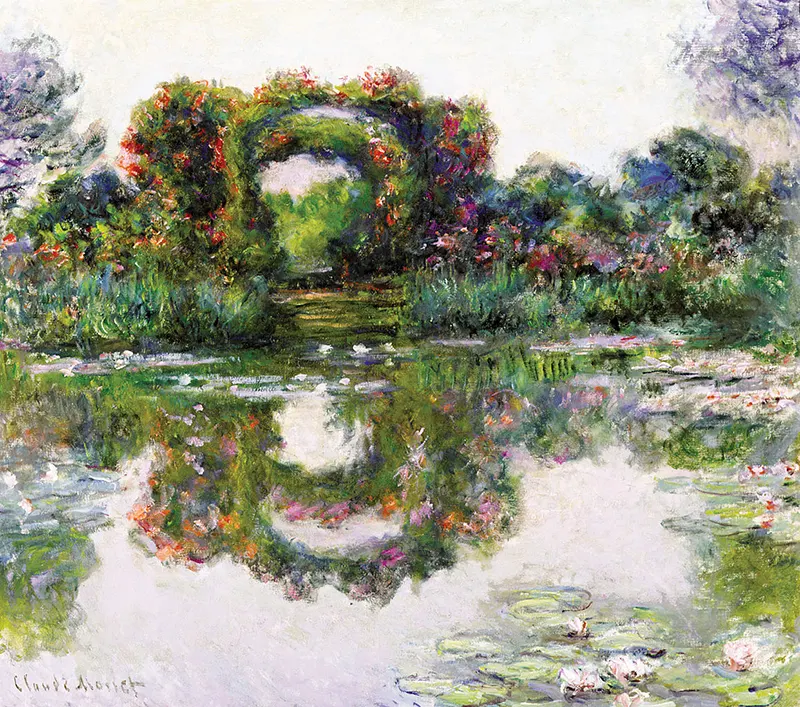
Color and atmosphere take the lead in “Flowering Arches, Giverny, 1913,” where a garden structure thick with blooms rises like a green portal above a quiet pond. The arch’s rounded opening draws the eye inward, while reds, violets, and fresh spring greens are laid down in soft, broken strokes that let light feel as tangible as paint. Along the water’s edge, pale blossoms and lily pads scatter across the surface, hinting at a cultivated landscape designed for lingering and looking.
Across the pond, the scene doubles itself in reflection, turning the lower half into a shimmering, almost abstract mirror of foliage and flowers. Ripples blur the boundary between plants and sky, and the painter’s touch shifts from denser, textured greens on land to airy washes over the water. Even without figures, the composition suggests human presence through its tended paths and carefully trained arches—an oasis shaped by gardening and sustained by attention.
In the context of early 20th-century art, the work reads as a meditation on seeing: how changing light, moisture, and season can remake the same view from moment to moment. The Phoenix Art Museum presentation invites close looking at the interplay of structure and softness, where architecture is nearly swallowed by growth and color becomes a record of time spent outdoors. For readers searching for Giverny garden art, Impressionist landscapes, or Claude Monet’s late floral motifs, this painting offers a lush, immersive glimpse of nature arranged and then reimagined through paint.