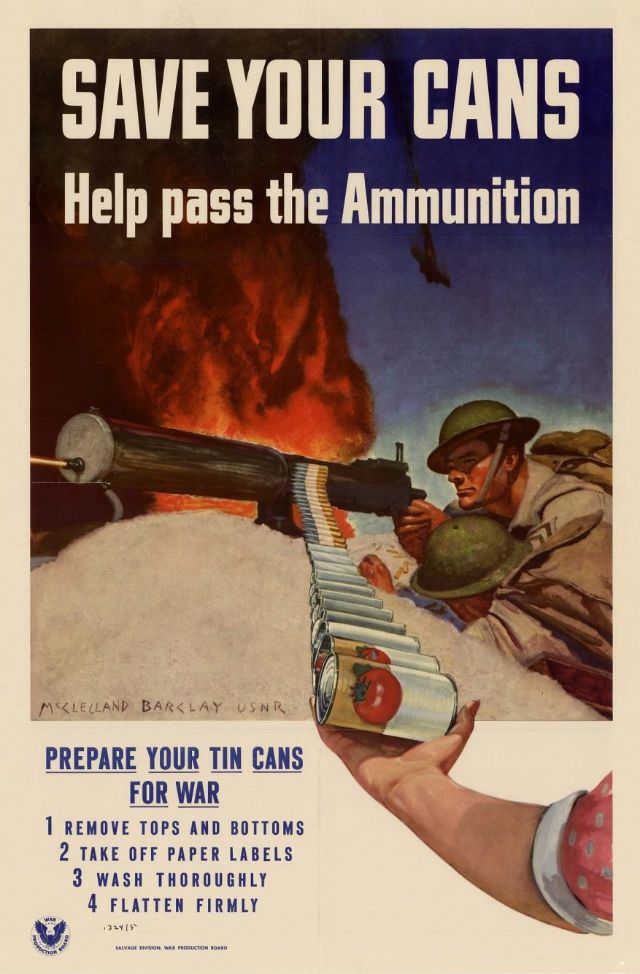
Bold wartime lettering—“SAVE YOUR CANS” and “Help pass the Ammunition”—turns an everyday kitchen scrap into a call to action in this 1943 WWII conservation salvage poster. The artwork stages a vivid contrast: a soldier grips a machine gun as smoke and fire flare in the background, while a hand in the foreground offers a neat line of tin cans like a belt of ammunition. That visual metaphor makes the message unforgettable—home-front salvage was presented as direct support for troops in combat.
The poster’s design leans on urgency and clarity, using large type, dramatic color, and a tightly focused scene to keep the viewer’s attention. By linking recycled metal to munitions, it sells the idea that rationing and recycling weren’t merely sacrifices, but practical contributions to the war effort. The result is propaganda in its classic sense: persuasive, emotionally charged, and built to move citizens from sympathy to specific, repeatable action.
Practical instructions at the bottom—how to prepare tin cans by removing ends, stripping labels, washing, and flattening—underscore that this is more than a stirring image; it’s a household checklist for wartime salvage drives. For historians and collectors of WWII home front posters, the piece offers a compact snapshot of how conservation, recycling, and morale campaigns were packaged as patriotic duty. It also reads surprisingly modern, reminding today’s viewers how public messaging once tied everyday recycling directly to national survival and collective responsibility.