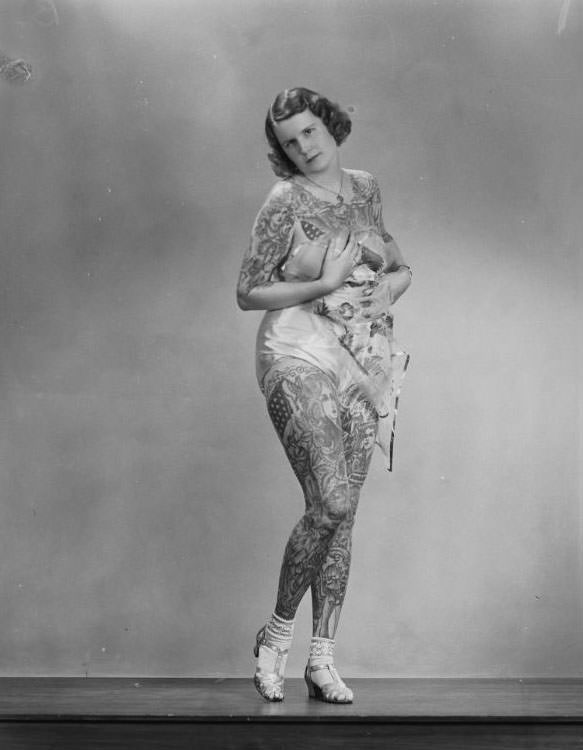
Betty Broadbent stands in a poised studio pose in Sydney on 4 April 1938, presented to the camera with the calm confidence of a seasoned performer. Her short, softly waved hair and minimal backdrop keep attention on the intricate tattoo work that earned her the showman’s epithet “Tattooed Venus.” A light wrap and delicate, strappy heels underline the era’s stage styling while letting the body art remain the true subject of the portrait.
Across her arms, torso, and legs, dense ornamental patterns and pictorial motifs read like a gallery arranged on skin, the kind of spectacle that fascinated audiences in the interwar years. The photograph balances glamour and novelty: the stance is almost classical, yet the overall effect is unmistakably modern for its time, challenging neat boundaries between “artworks,” entertainment, and self-fashioning. Even in monochrome, the layering of ink suggests hours of labor, personal endurance, and the professional polish of a curated act.
For readers interested in tattoo history, sideshow culture, and 1930s popular imagery, this period photograph offers a vivid window into how tattooed women were marketed and viewed. It also serves as a reminder that body art has long been part of public performance and commercial photography, not merely a private statement. Filed under artworks, the image invites close looking—at costume, posture, and pattern—while situating Broadbent’s celebrated persona within the visual culture of Sydney in 1938.